Disclaimer: “The content of this website is mine alone and does not necessarily reflect the views of the U.S. Government, the Peace Corps, or the Ghanaian Government.”
January 2026
For the better part of seven decades the yearly rhythms of my life have been marked by the four seasons. The clothes I wore (shorts vs down coat); the outdoor activities that I could or could not do (volleyball/biking vs broomball/XC skiing); my mode of transportation (bicycle vs. car); the weather hazards I had to be aware of (rain, snow, ice, thunderstorms, tornadoes, hurricanes); and whether or not I could sleep with the windows open were just a few aspects of life that were strongly influenced by the seasons. There are good reasons why humans adopted names for them. The words Spring, Summer, Fall, and Winter convey the time of year, the months we associate with each season, the weather that one can expect, and seasonal holidays or activities. Antonio Vivaldi wrote beautiful music to capture the sounds of The Four Seasons. If you don’t like the current weather/sports/outdoor activities then be patient; you can look forward to a change of season before long.
The depth and duration of the seasons shifted as I moved from suburban Washington, DC to the Research Triangle of North Carolina, to the Twin Cities of Minnesota, but in each location there were four clearly recognizable seasons. But living just north of the equator for the past two and half years has left me feeling a bit disoriented. I realize that I like having a change of season that I can look forward to. I miss that. In Ghana there are basically just two seasons: rainy and dry. Where I live now, the rainy season begins in March (more or less) and extends to October (more or less), with a bit of a dry spell in August (kind of like a time-out). Now it’s very dry. One of the more disorienting aspects of life here is that December, January, and February are the hottest months of the year. Today’s high temperature was in the mid-90s; the temperature in Minneapolis was in the low teens. There’s a sameness to the days here that can leave me in a daze. What month is it?
Perhaps more disorienting than the weather itself is that, as far as I can tell, the words Spring, Summer, Fall, and Winter have little or no meaning here – Ghanaians don’t use those words. Weather that I associate with “summer” is the weather that Ghanaians experience year-round. They don’t have Spring, Fall, or Winter. Or, they have times of the year that they think of as “cool” but there’s always hot sun in the middle of the day, no matter the time of year. This is a significant difference between most Americans and Ghanaians. I catch myself referring to something that happened “last summer” and realize that people here don’t understand that I’m referring to the period of June, July, and August. If I want to be understood, I have to be specific and say, “Last August I went to America to visit my family and friends.”
Understandably, the concept of winter is the most difficult for them to comprehend. A Ghanaian teacher friend (a science teacher, no less) struggled to grasp the concept of negative temperatures. For that matter, I suppose a lot of Americans do, too. This unfamiliarity with winter really struck me in December 2024 when I was doing some shopping in a big US-style grocery store in Accra and heard the song, “Baby It’s Cold Outside” over the speakers. I smirked. Setting aside the underlying message of the song, Ghanaians would need an explainer on the concept of weather that is so cold that it could be too cold to go outdoors. That idea is entirely outside of their realm of experience.
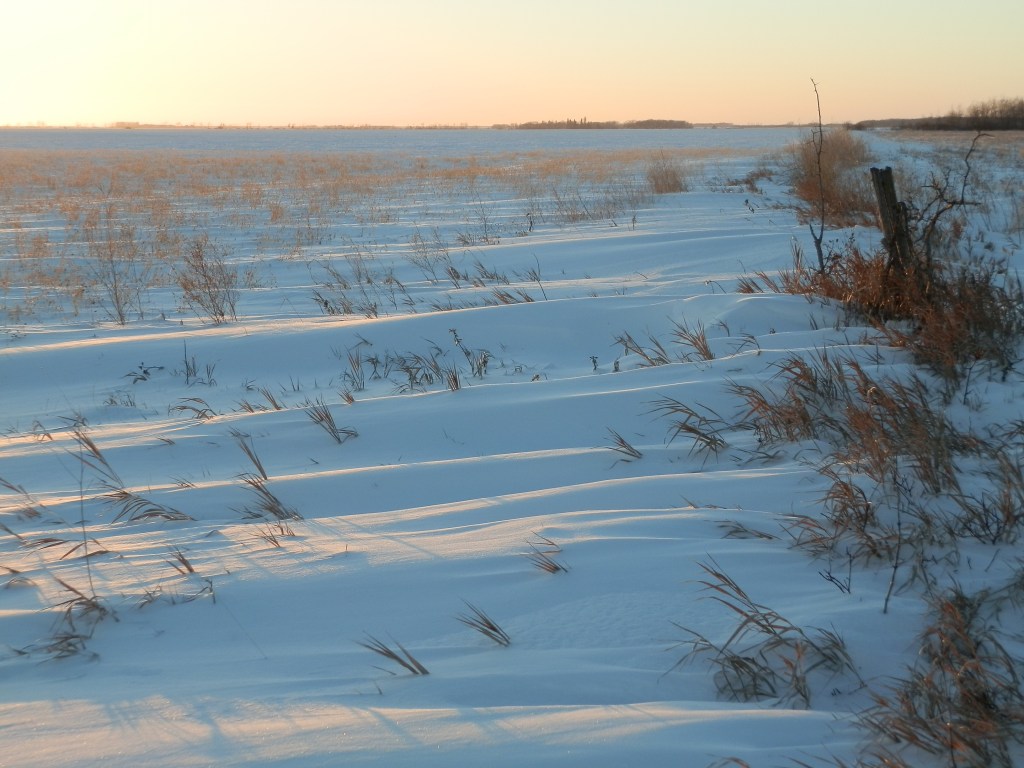
Without intending to, I “discombobulated” (a new word, check it out) one of my new friends. Dzidzɔ (pronounced like “GI Joe” but leave out the I; it means “Happy”) is a student in 9th grade who lives in the neighborhood. She is sweet, good-natured, hard-working, and has a good command of the English language, so we’ve had some enjoyable conversations. She marveled at my collection of pop-up Christmas cards (thanks again Barb!), which led me to describe what Christmas is like in Minnesota. I showed her photos of a farm in the far northwest corner of the state, where it is exceptionally flat and, at this time of year, extremely cold. As my good friend Hank would say, “The only thing between here and the North Pole is a few strands of barbed wire.” That was an exaggeration, but not by much; there’s nothing to impede the arctic winds that sweep down the prairie and bring bitter cold and lots of snow to the farm. Dzidzɔ stared in confusion at a photo of a snowy, windswept field receding to the horizon and struggled to reconcile it with the image of her father’s eternally green farm that is indelibly imprinted in her memory after so many long days spent laboring on it.
Unable to bridge the gap between her mental image of a farm and the photo in front of her, she blurted out in a flustered voice, “How do you farm??!!” I suppressed the urge to laugh and patiently explained that by April or May the snow will be melted (mostly) and the farmers will have enough time to plant, grow, and harvest their crops before the snow arrives again. I suppose I left her somewhat reassured that humans can actually live in such an environment, but the question of why anyone would choose to live there was a deeper mystery beyond comprehension.
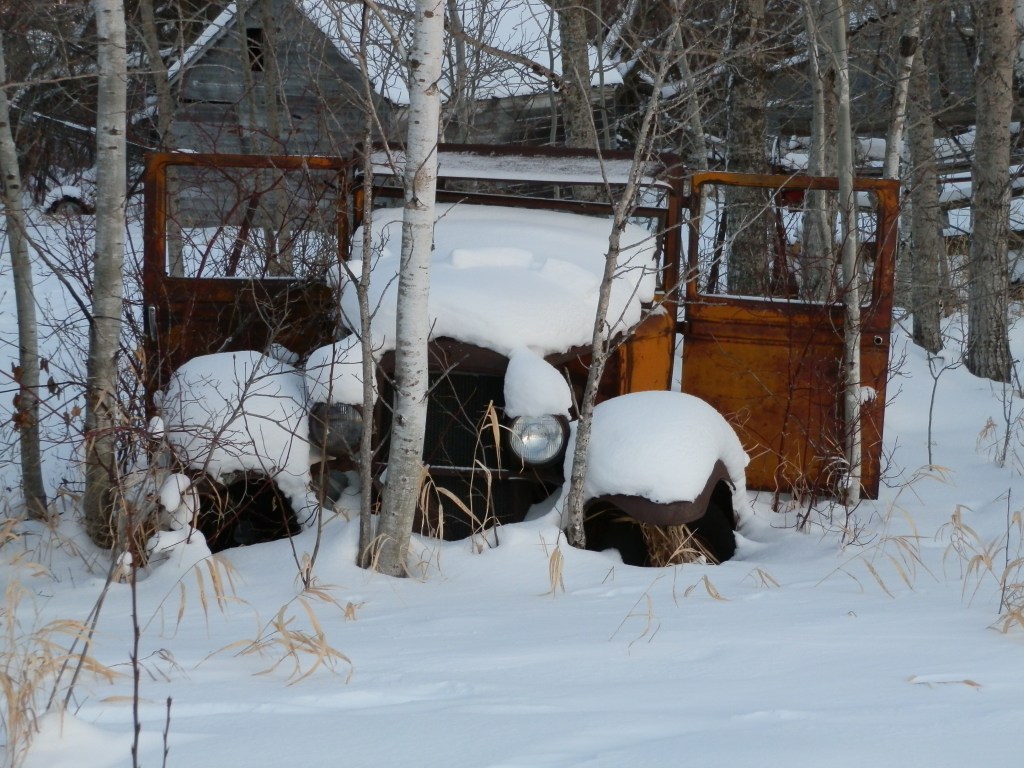
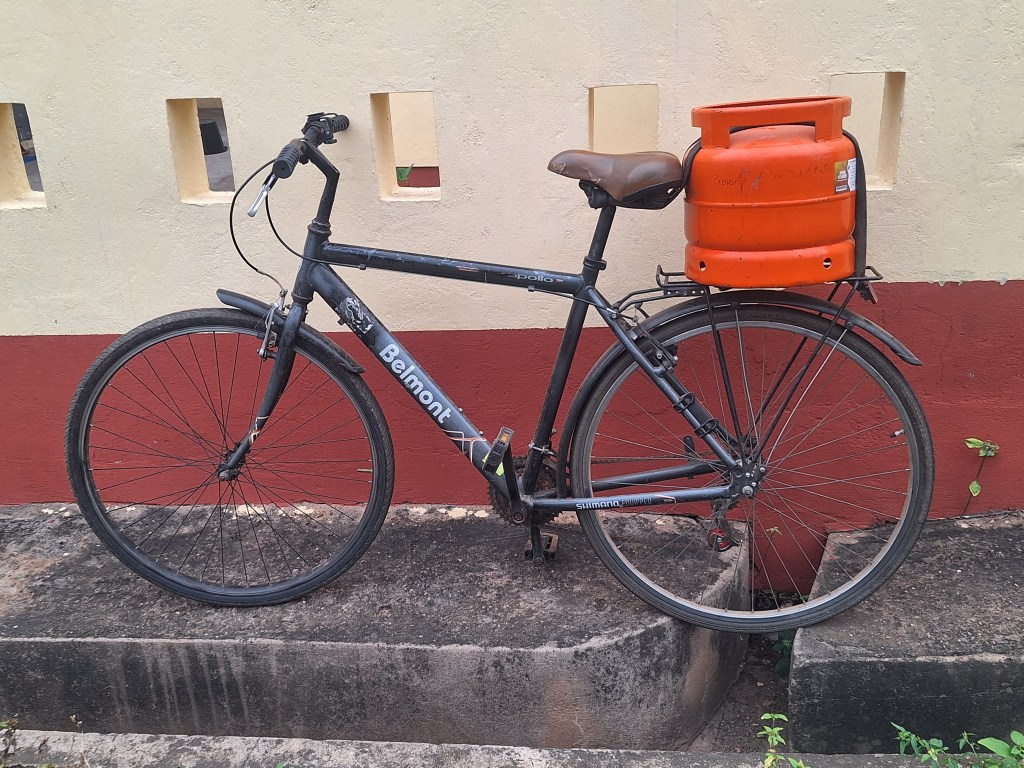
In rural Ghana, when a vehicle dies it’s stripped down to the frame for parts that can be salvaged or repurposed.
I’m Appalled
Over the past 2+ years that I’ve been in Ghana, a thoughtful and well-meaning friend has occasionally sent me emails with the subject line, “Are you OK there?” Each email included a link to an article or video that she had recently read or seen about civil unrest in an African country. The country in question has never been Ghana; I think she just wants to be reassured that I’m not in harm’s way.
Now the tables have been turned. Every morning I look aghast at the headlines in the NY Times and WaPo and get sucked into watching YouTube videos featuring talking heads analyzing the latest developments in my home state of Minnesota. I am deeply, deeply saddened by the wanton shootings of Renée Good and Alex Pretti as well as all the gratuitous violence against anyone who catches the attention of the nameless, faceless Storm Troopers of the would-be Imperial Ruler. Sadly, I don’t have to ask if you are OK; I can’t imagine that anyone feels safe and secure.
Seeing the bravery of friends and neighbors who are peacefully exercising their First Amendment rights makes me wish I were there to show my support. If I didn’t feel that I was making a worthwhile contribution here, I would be on a plane as soon as possible. It lifts my heart to see online posts from churches overflowing with people participating in sing-along protests, the many posts of the Alex Pretti memorial bike rides from all over the world (I’m really sorry I missed that one), and reports of people participating in local government meetings discussing what can be done to keep the streets and neighborhoods safe. Thank you, thank you, thank you to everyone who has participated in any way to express their outrage over the gratuitously violent acts of this administration.
The Last Bastion?
The only part of the federal government that is making a stand against the brazenly corrupt and lawless acts of this administration are the courts (except SCOTUS, which is a lost cause). As a fan and admirer of eloquent prose, I especially enjoyed reading the opinion of Judge Fred Biery of Texas, who ordered the release of 5-year-old Liam Conejo Ramos and his father from a detention facility there. Here’s a small taste of Judge Biery’s opinion:
“Observing human behavior confirms that for some among us, the perfidious lust for unbridled power and the imposition of cruelty in its quest know no bounds and are bereft of human decency. And the rule of law be damned.”
You can access the full opinion as well as an annotated version of it at this link (you may have to copy and paste it into your browser):
In Under 500 Words, a Judge Weaponized Wit to Free the Child Detained by ICE https://www.nytimes.com/interactive/2026/02/03/books/judge-ruling-liam-conejo-ramos-analysis.html?unlocked_article_code=1.JlA.oJl9.ZhzSBPucT-A4&smid=nytcore-android-share
Photo Gallery

Best wishes to you all. I think of you every day. Spring is coming!
Correction: I misspelled Renée Good‘s name. I’ve corrected that error.
 Not A Typical Day
Leave a comment