Disclaimer: “The content of this website is mine alone and does not necessarily reflect the views of the U.S. Government, the Peace Corps, or the Ghanaian Government.”
March 21, 2026
Good morning. I assume that many of you have recently received an email from Peace Corps inviting you to donate to a project that I am working on. I can hear more than a few voices saying, “What’s up, Andy? Tell me more about your project.” I am happy to bring you up to speed.
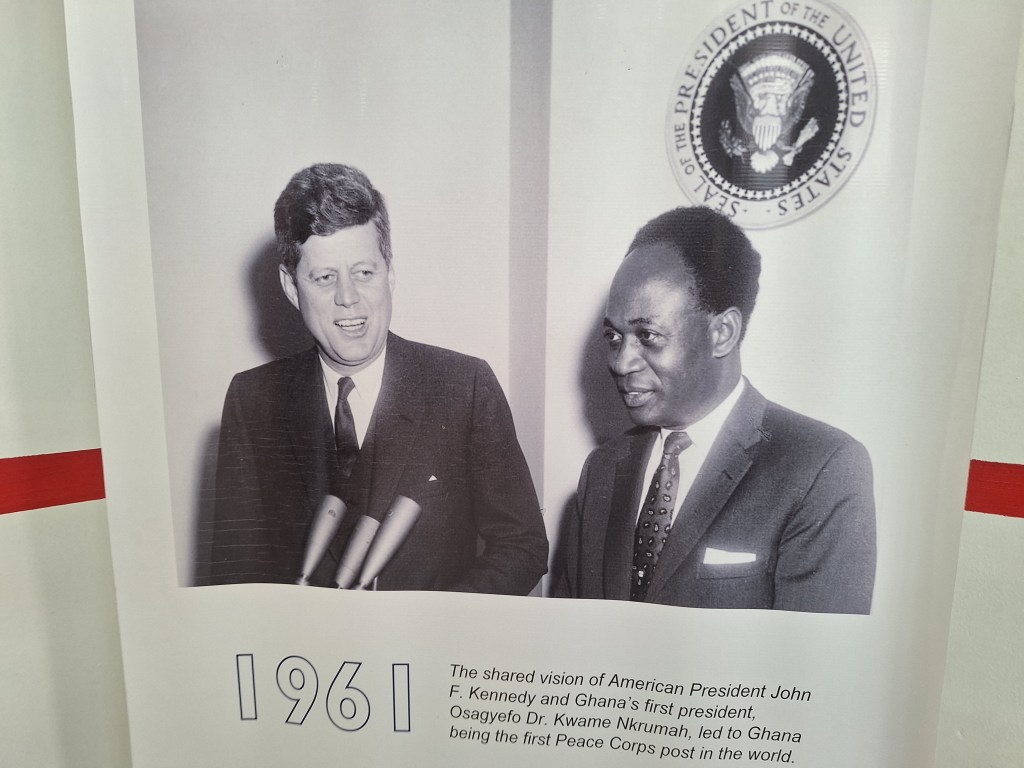
But first, let me acknowledge that Peace Corps is celebrating it’s 65th anniversary this year. President John F. Kennedy established the agency on March 1, 1961 by Executive Order, which Congress made official with legislation in September of that year. The organization celebrated Peace Corps Week from March 1 to March 7 this year. (Yes, I’m late in promoting it, but I know from experience that once you reach the age of 65 you have some flexibility on celebration dates.) Peace Corps/Ghana is especially proud of this anniversary because Ghana was the first country (AKA “post”) to welcome Peace Corps volunteers, due largely to the close relationship between JFK and Ghana’s first president, Kwame Nkrumah. Ghanaians are proud every time they see the photo of the two presidents together.
Community-based Development
Peace Corps volunteers do a variety of activities, but they tend to identify most with the work they do on a day-to-day basis: “I’m a teacher” or “I work in a health clinic” or “I’m in agriculture”. Another important aspect of a volunteer’s role is to work with their community on a project that the community has identified as a priority. In fact, this is a key part of the Peace Corps Mission Statement:
To promote world peace and friendship through community-based development and intercultural understanding.
Community-based development means that the community has ownership of the project, they have identified the project as a priority, and they are fully engaged in the successful completion of the project. In my mind, the word “development” means some physical change, such as digging a well for water, building latrines, or building a classroom. But I’ve since learned that it also encompasses human development. By working on a project, community members learn about planning, budgeting, scheduling, and other aspects of project work. In addition, they learn about how to maintain the physical product of the project. It took me a while to understand the terminology, but this sort of human development goes by the name “capacity building”, i.e., increasing the abilities of the community members to undertake projects in the future on their own.
In addition to capacity building, another important element of community-based development is sustainability: Once the project is completed, will the physical output (a well, latrine, or classroom) continue to provide the intended benefits for many years to come? Is it sustainable? Do the community members know how to maintain the new hardware?
One way that Peace Corps ensures the sustainability of projects is to require that the community makes a substantial commitment to the success of the project in terms of the materials, labor, and/or cash that they contribute to the project. Specifically, the value of the community’s contribution must be at least 25% of the total cost of the project. This ensures that the community has some skin in the game – they have invested their own resources and labor into the completion of the project. Their success is tied to the ongoing success of the completed project and continues to be so long after the Peace Corps volunteer leaves the community.
A Medical Waste Incinerator
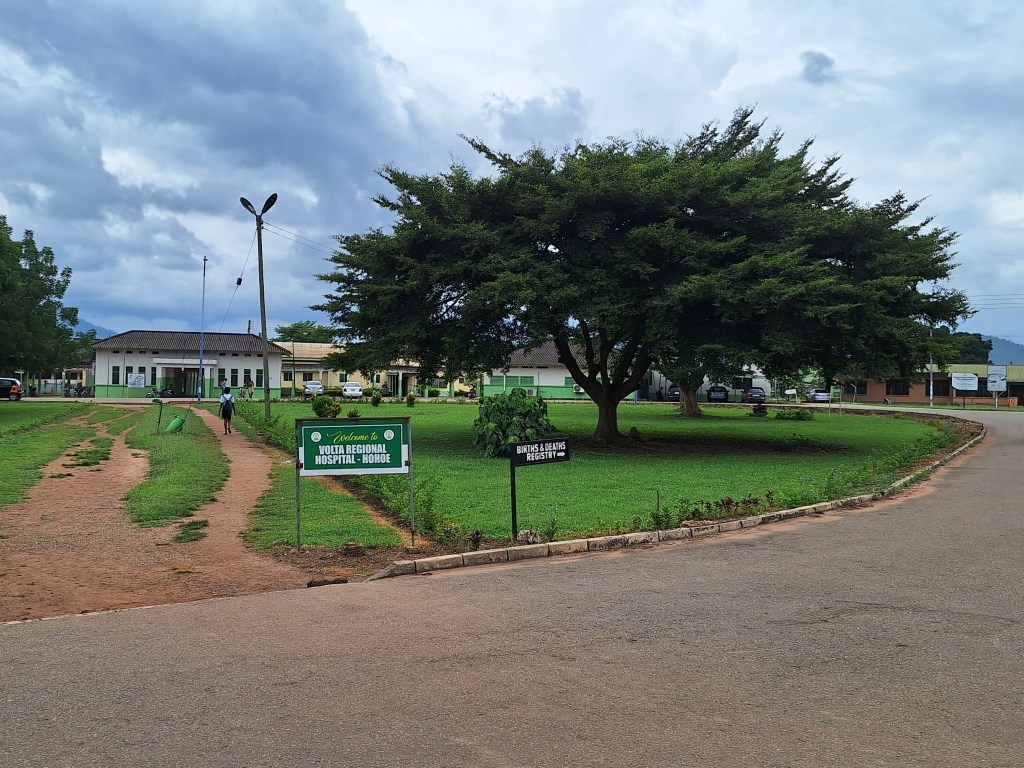
Those who have read the Warp Speed entry of this blog may remember that my primary goal for this third year of Peace Corps service was to teach healthcare workers about proper use of respiratory protection equipment, such as N95 respirators. Just the same, based on the research I’d been doing for a year prior to my arrival at the hospital where I’m now working, I was uncertain on how much the staff here would know or understand about the topic. And, given that I’ve been fortunate enough not to need to spend much time in hospitals during my life, there was a lot that I would need to learn about how hospitals in Ghana operate. In short, I would need to be flexible.
The first meeting that I attended was with the Head Administrator (HA) and his staff. The Head Administrator oversees all the non-medical aspects of running a hospital: HR, budgeting, maintenance and repair, property management, and waste management, among many other responsibilities. At that first meeting, the HA and his staff felt it was important that I be informed about development projects at the hospital. (I am convinced that they weren’t aware of Peace Corps’s interest in community-based development.) In hindsight, I’ve come to believe that the HA and his staff, who knew that I have no medical training, were casting about, trying to think of a way to put me to work. One of the topics of discussion was a bid they had recently received for a project to replace their waste incinerator. Afterwards, we walked out to view the existing incinerator.
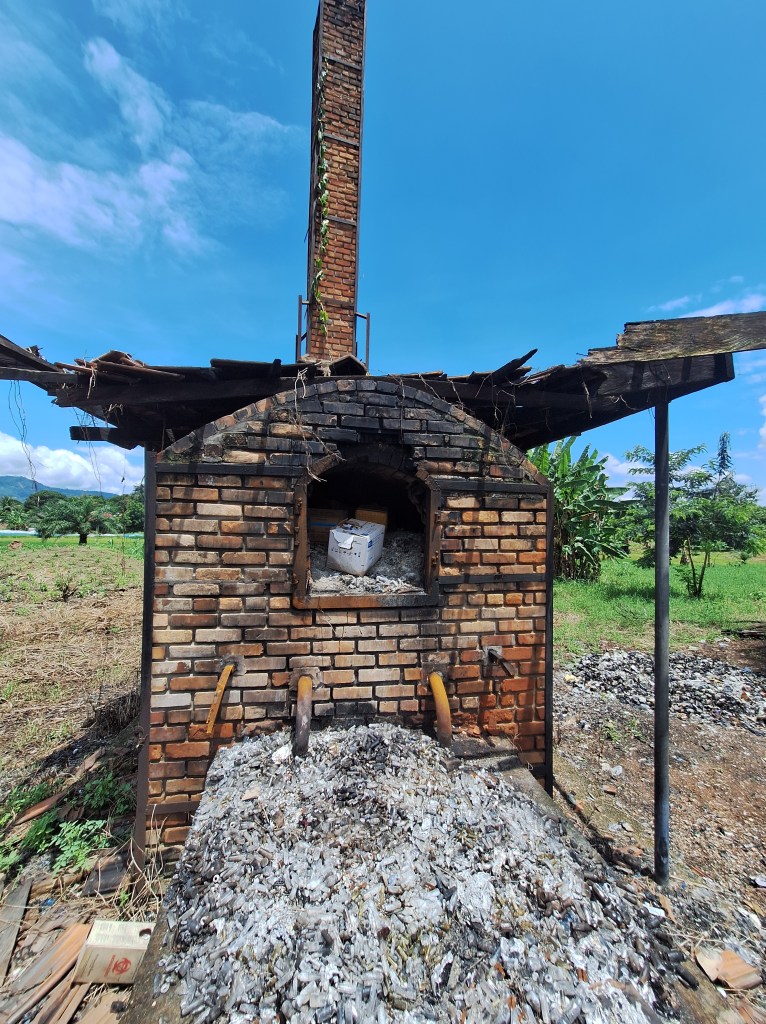
When I arrived here, I knew very little about medical waste. Likewise, although early in my career I learned about technologies for preventing pollution from coal-burning power plants, I didn’t know anything about incinerators for infectious waste. But as an engineer with plenty of time on my hands (for a variety of reasons), I did what comes naturally: I began researching medical waste incinerators. I found a variety of documents on subjects such as the various kinds of medical waste (thankfully, most of it is not infectious) and methods of treating and disposing of infectious waste. Perhaps most helpful were the Ghana Ministry of Health’s (MoH) documents describing the policy for healthcare waste management and the national guidelines for healthcare waste management (both published in 2020).
As I read through those documents, I realized that there were some significant weaknesses in the way that the hospital was handling it’s infectious waste. When I finally got to meet with the Medical Director (MD) and the HA (about 3 weeks after I arrived), we discussed the need for a new incinerator. They expressed concern about the state of the current one and lamented the difficulty of coming up with the funds to pay for it. Their moods brightened when I said that Peace Corps could help fund up to $10,000 of the cost, but the community would have to contribute at least 25% of the total cost. At the same time I talked about the importance of sustainability and the need to implement the MoH policies and guidelines for waste management.
In the intervening months I’ve done a lot more research on the topic of waste management technologies; met with several people at other hospitals to learn about their incinerators; and had discussions with key personnel in the Ghana Health Service and the MoH. The MD and HA worked to bring a new employee onboard who will be responsible for waste management. A management committee was established in accordance with the MoH policy to oversee implementation of the policies and guidelines.
All of which brings me back to the email that you might have received from Peace Corps, because ultimately I need to rely on you to help me raise the funds to help us build a new incinerator. This is a common method for funding Peace Corps projects. Thank you for reading this long message. My Ghanaian colleagues and I are very grateful for any support you can provide.
Click here to donate to current Peace Corps projects in Ghana
Note: The link will take you to the page which lists all the projects in Ghana that are currently in need of funding. Those projects are also worthy of any support you might be inclined to give them. Before Elon Musk threw USAID into the woodchipper, projects like the Dalun Latrines Project that Marie is organizing (and all of water and sanitation projects) would have been fully funded immediately by USAID. Now Marie has to go through the fundraising process like the rest of us. I’ve already expressed my opinion on that development.
What happened with respirators?? Coming soon.
 Not A Typical Day
Leave a comment