September 19, 2023
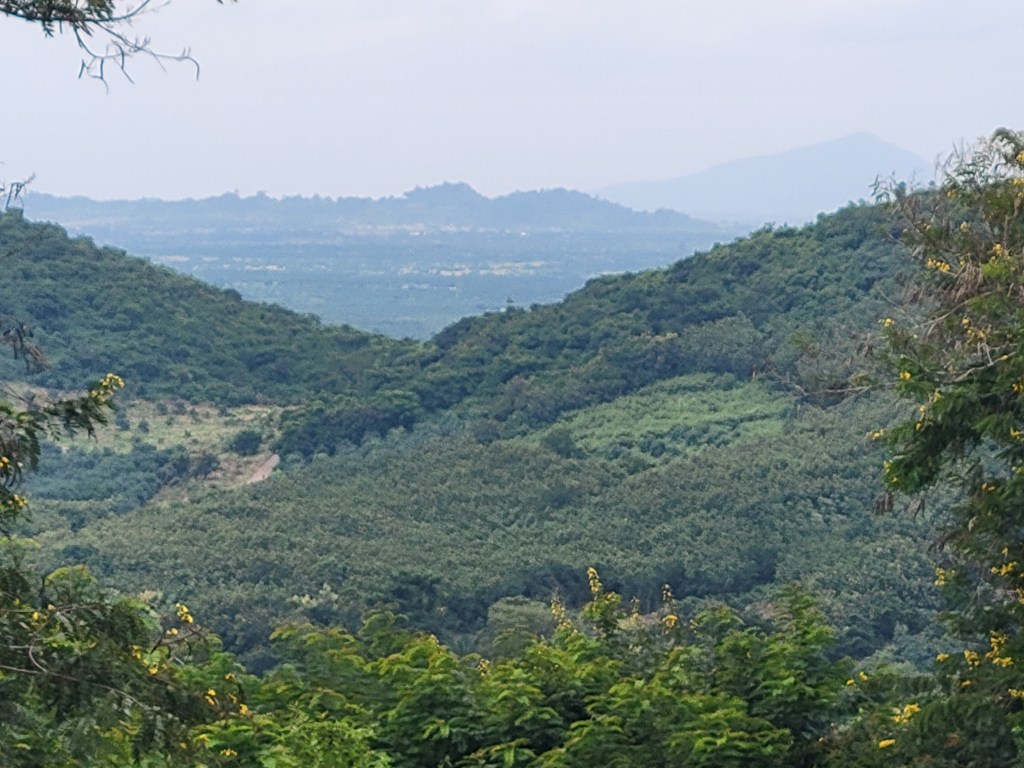
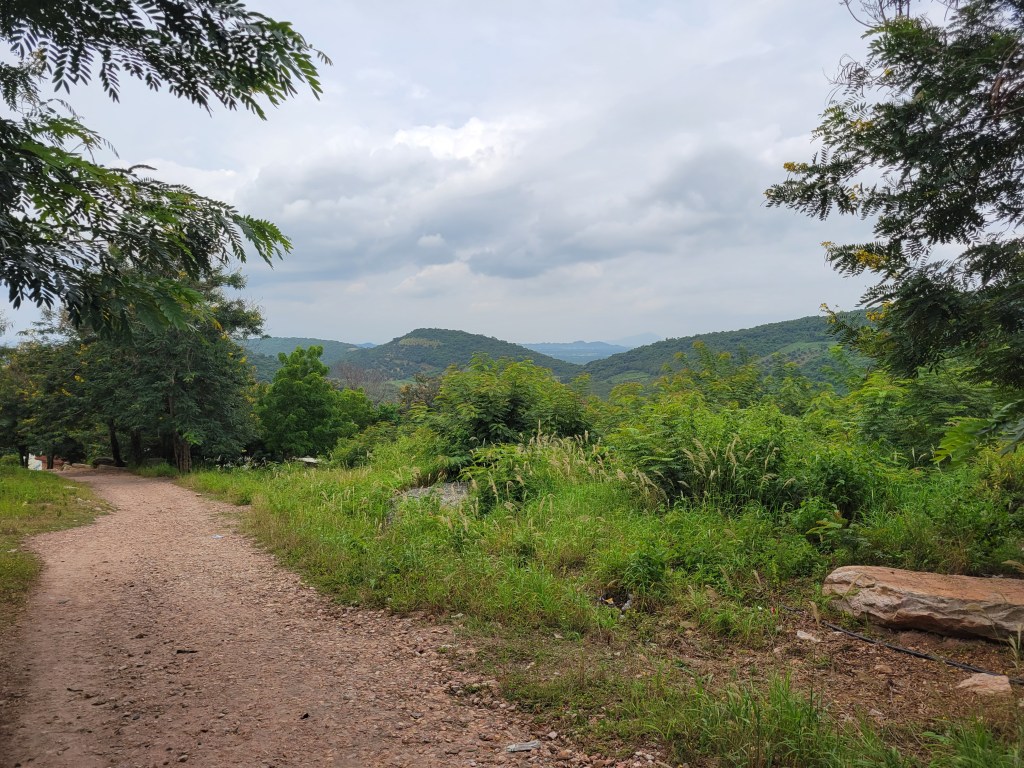
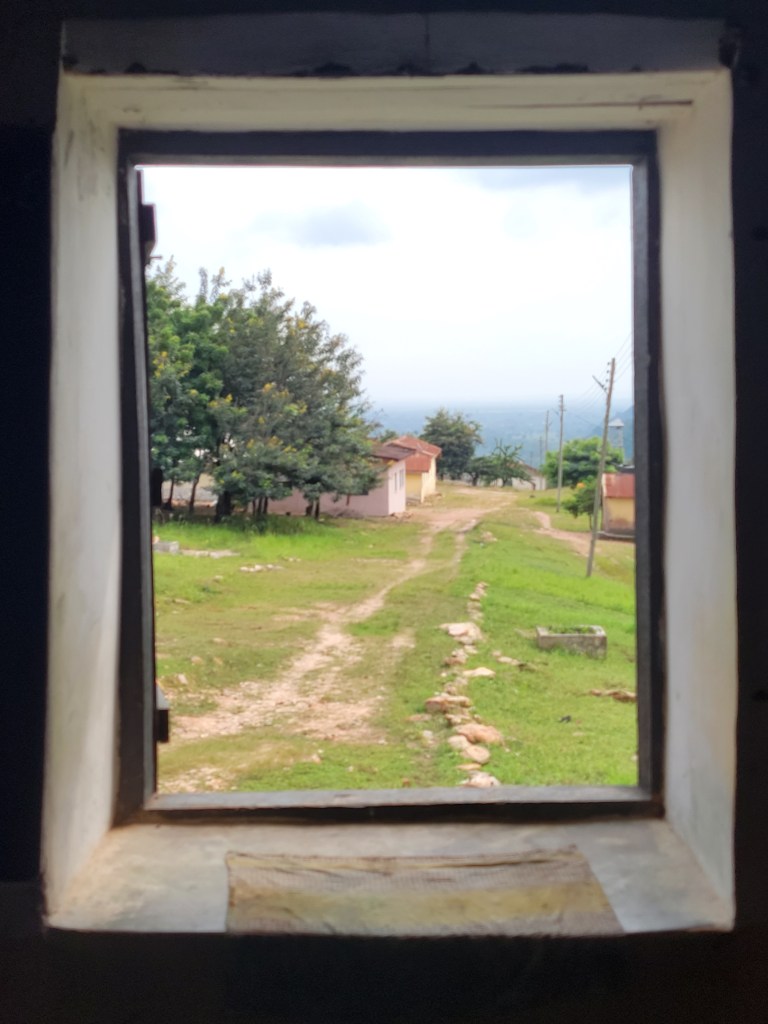
Our Pre-Service Training was held in a small farming community about 2 hours from the capital city. It was humble but very picturesque.

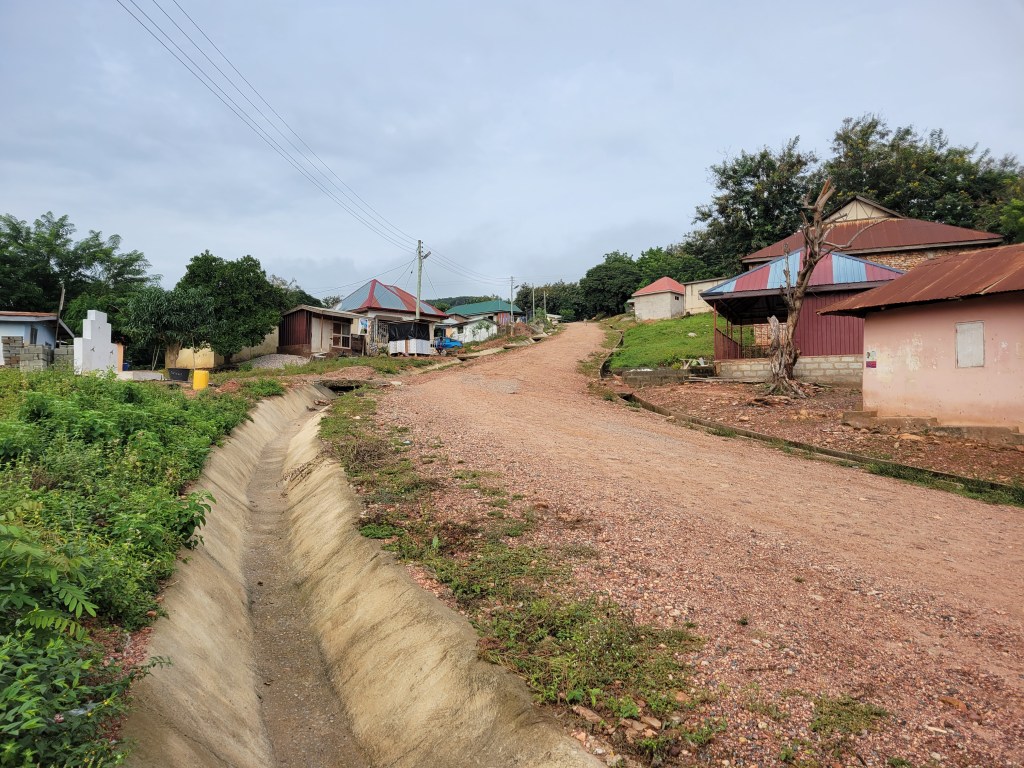
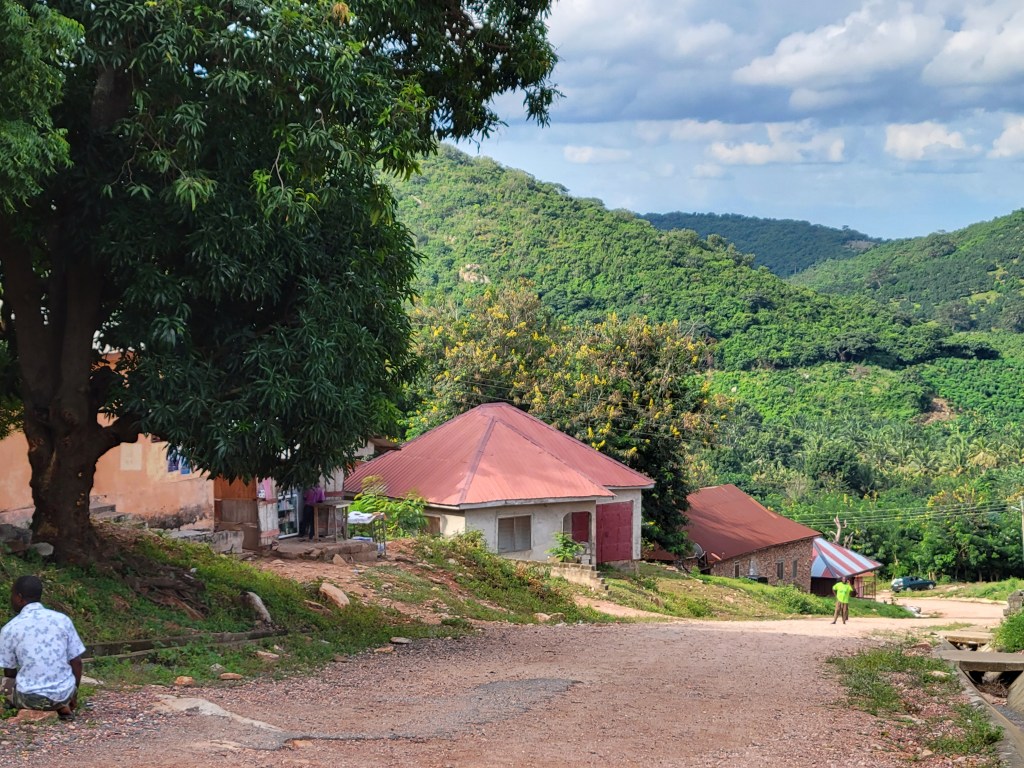
The two photos above show typical mid-day traffic, i.e., there’s little to none. I’m reminded of visiting rural Minnesota: by the time a car arrives at the farm everyone knows the make and model of the car, who owns it, who’s driving it today, and probably who the passengers are, where they’re coming from, and where they’re going. Life in our village was kind of like that but there were even fewer cars.
The circus comes to town
There was no surprise to our arrival in town. People knew the exact date and time that we would be there and must have been anticipating our arrival for weeks. Nevertheless, the Peace Corps bus that we rode in (stuffed with 11 Trainees and all our luggage), tooted the horn from the moment that we entered town until we arrived at the church where we would meet our homestay families. We lived up to the excitement of a circus arriving in town: we were young (21) and old (two of us over 60), eight men and three women, one deaf man, three African-American women, one man of Korean descent, a married couple; in short, a pretty broad slice of US demographics.
In hindsight, it’s amusing to consider how big of an impression we must have made on the community. I imagine we provided plenty of entertainment and fodder for daily discussion. Although I never got any direct feedback confirming it, I’m pretty sure everyone in town knew exactly where we were at all times. I may have thought I was being discreet when I met up with the other Trainees to enjoy a beer at a local establishment, but anyone in the village who wanted to know where we were and what we were up to would have no trouble finding out.
It was only upon departure that the image of the circus arriving in town came to mind. Because our departure left a bit of a hole in the hearts of those we left behind. Kids would say they want to visit Ohio or Arizona or Idaho based on the home states of the Trainees that they got to know best (sorry Minnesota, I didn’t do a very good job of promoting snow and cold to Ghanaians).
Homestay family


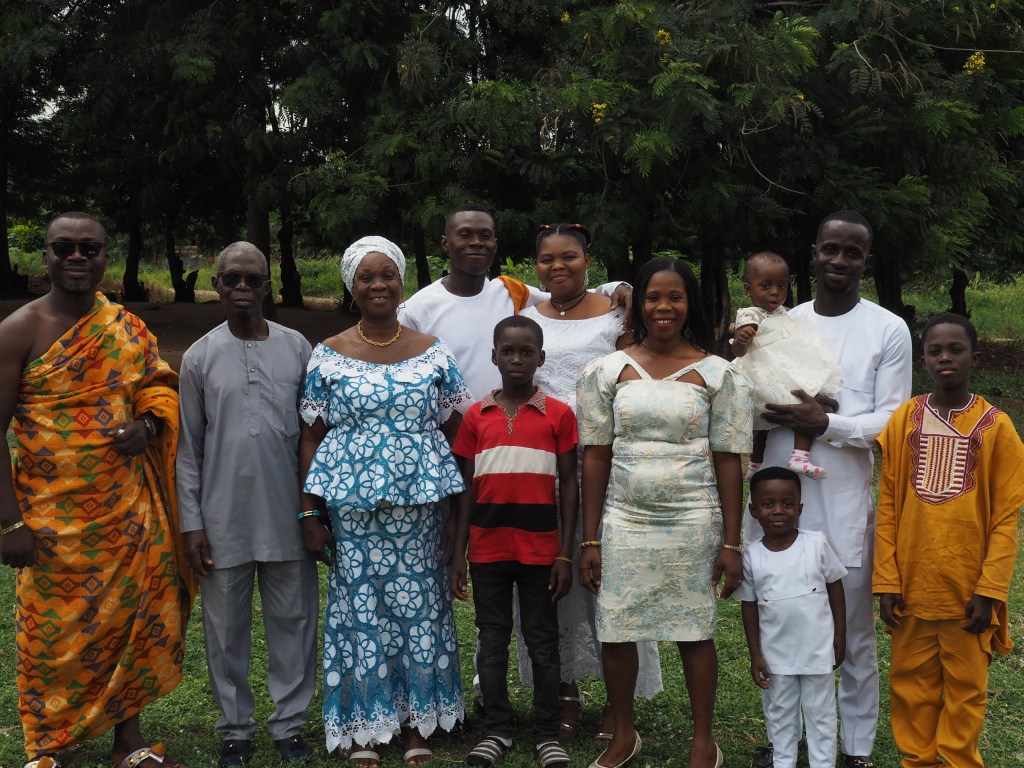
I was very happy to get permission from Eunice and Eric to share this photo with you. I can’t say enough about the generosity and kindness that Eunice showed me for 10+ weeks (Eric works 2 hrs away in Accra and was only able to come home three times while I was there.) She prepared breakfast, lunch, and dinner nearly every day for the whole time I was there, did my laundry, and generally saw to it that I was comfortable and had everything I needed. Rather than try to resist her hospitality, I did my best to help by connecting with Nana Kyere. The day I first arrived I heard him singing the ABC song, so that became our shared anthem, along with Old Macdonald and Baa Baa Blacksheep. Then I found I could download a few children’s books onto my tablet computer. The Little Red Hen was a hit (although I’m sure that making things happen on the tablet by pushing buttons and sliding his finger across the screen were a significant part of the fun). And when I arrived home every evening Nana Kyere helped me carry my heavy knapsack to my room.
Meanwhile, Nana Adwoa was the sweetest baby one can imagine – always happy and smiling. If she was fussy then there had to be a good reason for it (like a new tooth coming in).
The photo was taken at about noon on a Sunday following a typical three hour long church service. I’ve commented before about Eunice’s mastery of laundry. See how bright white those clothes are.
Previously I reported that Eunice was the mother of Kobi and Nana Yaw, but that was incorrect. They lived in the household the entire time I was there, but I still don’t know who their parents are. I owe them a big debt of gratitude because every time I would try to go get water for myself I was politely told to sit down while the boys were dispatched to do the heavy work.
Traditional culture
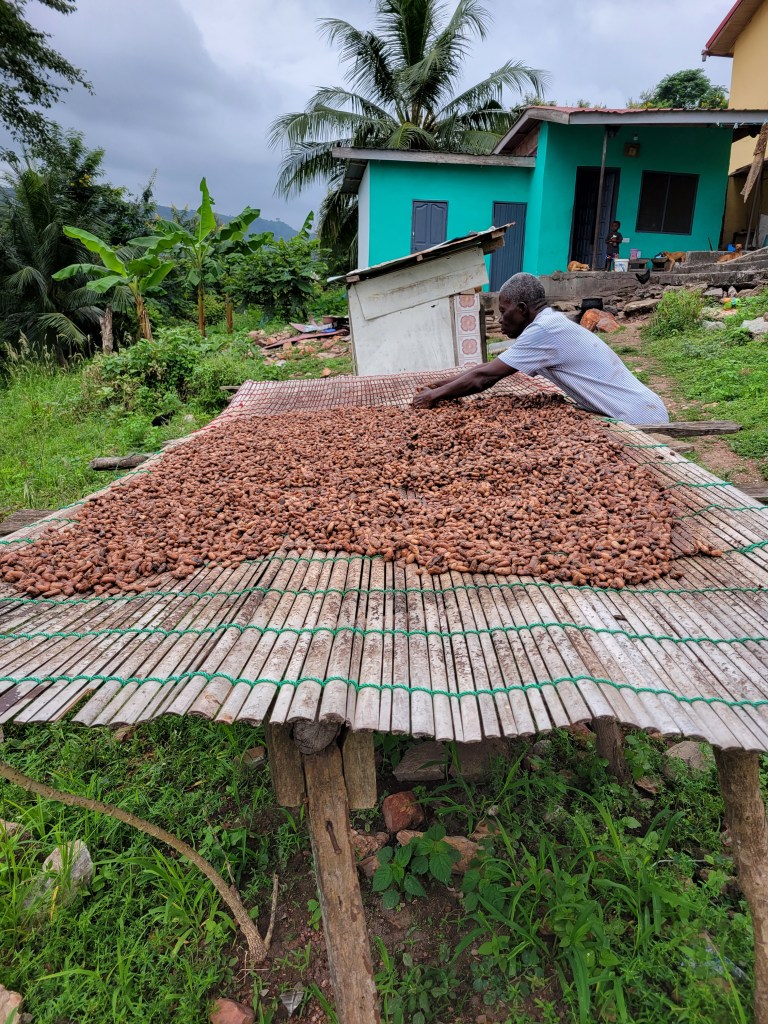
The British did not colonize Ghana as intensely or in the same way that they colonized North America. Yes, they established and occupied outposts along the Atlantic coast (“the Gold Coast”) and traded with the indigenous population for gold and enslaved people (not to diminish the horror of that tragedy), but there wasn’t a land rush of people from Britain displacing and subjugating the local population. If something didn’t directly affect their trading interests then the British didn’t involve themselves with local affairs. Consequently, tribal structures and traditions that had been in place for centuries continued as they were.
So unlike in the US, where Native American culture is marginalized, tribal traditions are very much alive and important everywhere in Ghana. Each village has a Chief, who is advised by a group of subchiefs, and a Queen Mother as well as subqueen mothers. This leadership structure manages conflicts between residents (e.g., land and water rights), decides when festivals (e.g., harvest festival) will take place, and myriad other issues. While royal lineage influences the selection of these tribal leaders, it’s also somewhat of a democratic process. Leaders are chosen based on their life accomplishments and the respect that they’ve earned within the community.
I was fortunate to watch part of the ceremony for installing a new subqueen mother. The townspeople took this process very seriously and celebrated with a lot of singing, dancing, loud music, and the occasional shotgun blast into the air.
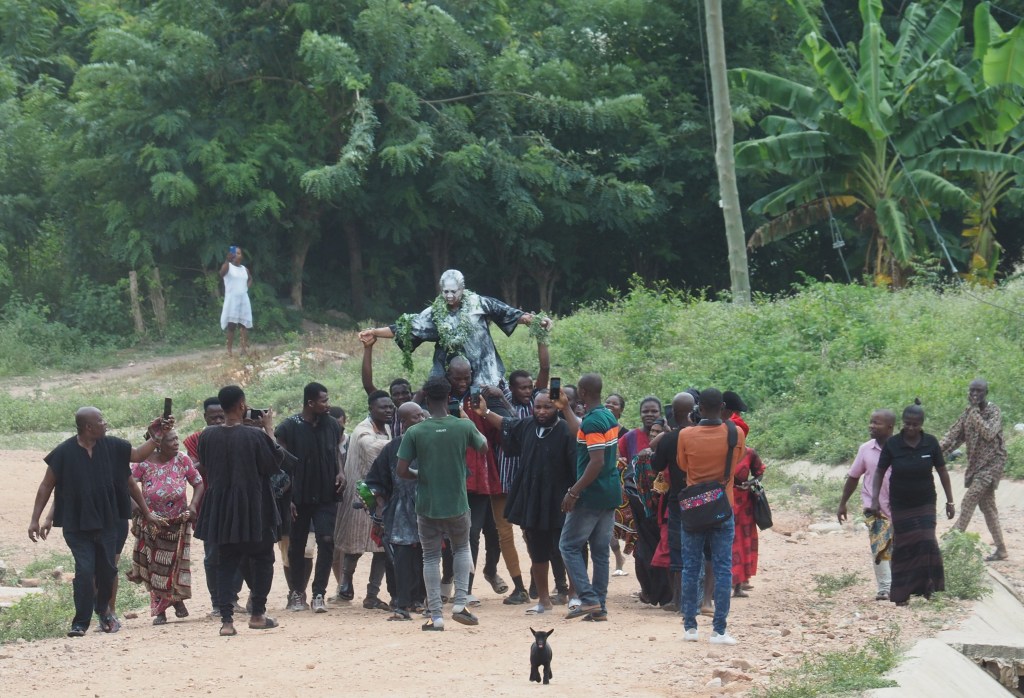
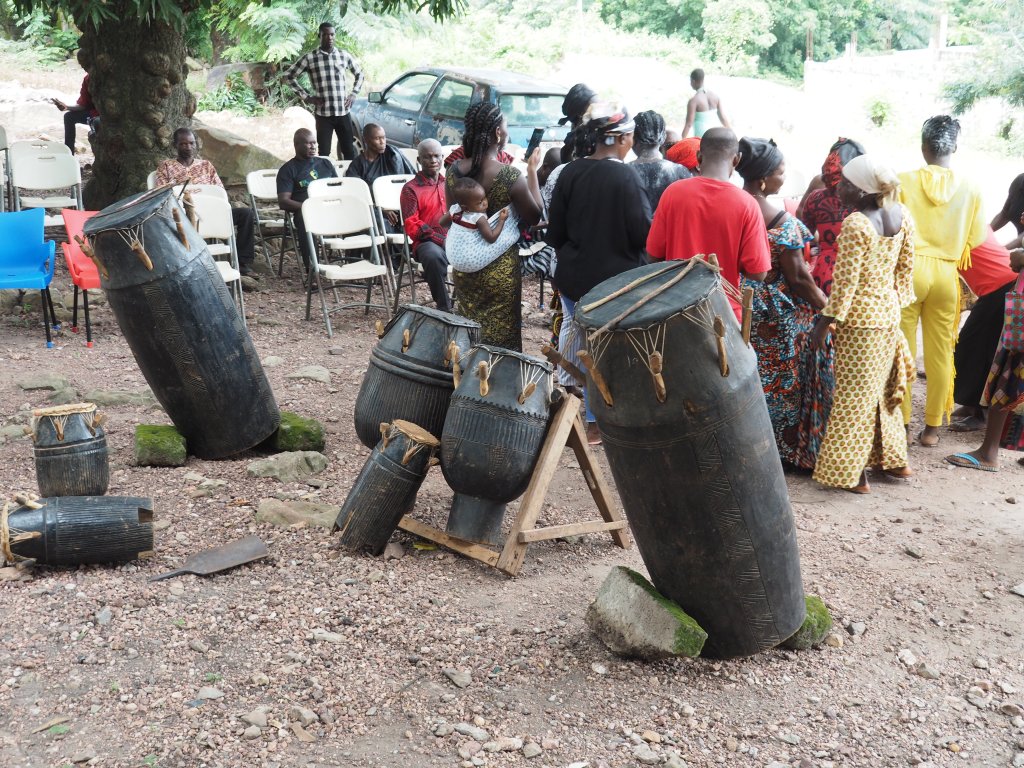
Note the woman in the center of the photo above with the baby on her back. That’s the standard way of transporting infants/toddlers or just keeping them close at hand and out of harm’s way. Women can carry babies for hours that way. (I never saw a man carrying a baby by that method.) The babies are quite comfortable with it, too. They get a bird’s eye view of whatever mom happens to be up to and they can just doze off to sleep when they get tired. Girls as young as 8 or 10 will practice carrying babies this way.

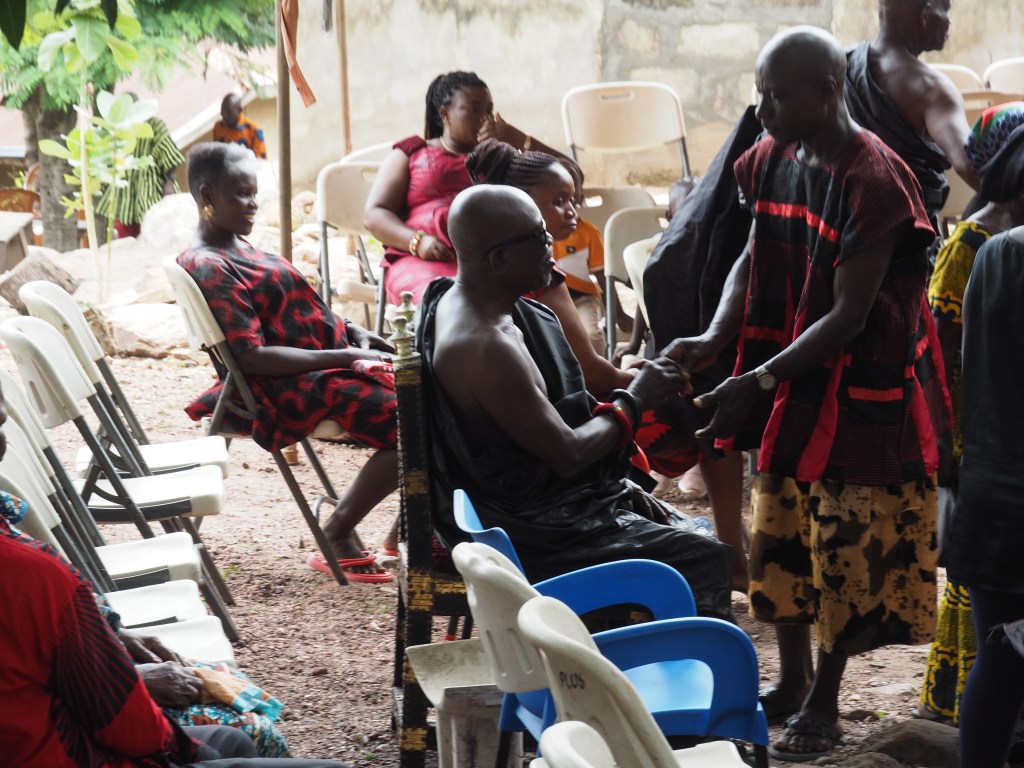
I didn’t get to watch the whole ceremony because we were still immersed in our Peace Corps education. Still, it was fun and enlightening to be a bit of a fly on the wall.
One last tidbit
I was intrigued to learn that there was a town crier in our village. When there was some important information to share with the town’s populace (e.g., the schedule for when the municipal water supply would be turned on next), a guy with a megaphone would walk along the main road announcing the details. That was the most effective means of communication because cellphone service was very spotty in the village. I don’t think landlines ever made much of an inroad into the community. So there was a town crier.


 Not A Typical Day
Leave a reply to Gina Cancel reply