October 29, 2023
Hi,
This is a collection of miscellaneous thoughts.
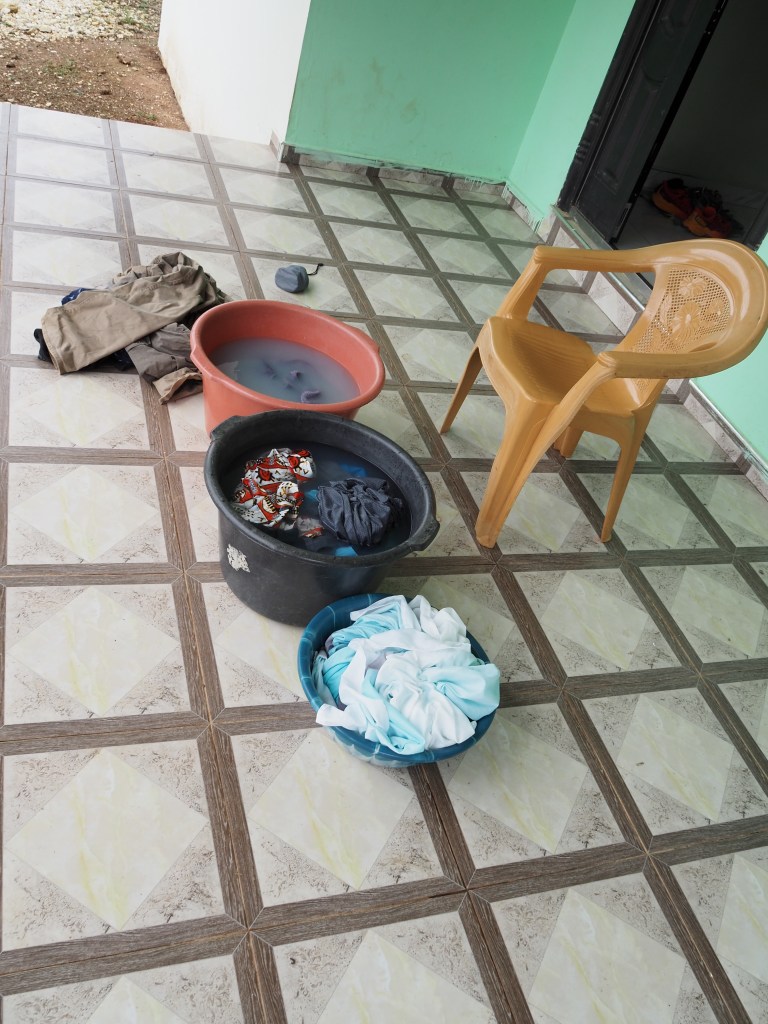
It’s Sunday night and my laundry isn’t done yet. Sunday is my usual laundry day because the communal water supply is generally on all day long on Sunday (from about 6 AM to about 4 PM), so I have plenty of time to clean and replenish my 100 liter (~ 25 gallon) water storage barrel and my 5-gallon drinking-water filtration bucket. After that I clean my laundry tubs (one for washing and one for rinsing) and I’m ready to start scrubbing by about 8. But for some reason the water petered out at about 7:30 this morning. I have plenty of drinking water, and I’ve been able to wash my dishes, but there wasn’t enough for laundry, so I’ll have to squeeze it in this week somehow. It takes about 3 hours for me to do my laundry, mostly because I don’t have a lot of practice doing it by hand. The most suitable place for laundry is on my front porch, where I set up my bluetooth speaker and listen to music (classical, jazz, folk) while I wash. I get appreciative nods for the music from some of the passersby. In that way, I meet one of the goals of the Peace Corps: introducing Ghanaians to American culture (although my classical selections are broader than just US composers). But all the same, I will never again take for granted the ability to run down to the basement, start a load of clothes, and then do other chores while the washing machine does the work.
The title of this piece reflects how I feel after being at my worksite for two months. Several times I’ve thought of the adventure by Alastair Humphreys, who undertook the challenge of riding a bicycle around the world, starting in August of 2001. I highly recommend his books about the adventure (Moods of Future Joys and Thunder and Sunshine). A big nod of appreciation goes to my niece Becca, who gave those books to my brother Lou, who then shared them with me. The memory that comes back to me was Humphreys’s expectation that the greatest difficulty he would face during his adventure would be the physically demanding work of riding his bike and the associated effort of camping outdoors a lot. But his body adapted to the physical work and outdoor living pretty quickly (granted he was young). Instead, he found that his greatest challenges were actually the emotional/psychological aspects of the adventure, which I don’t think he ever considered. Being alone in strange lands where he didn’t speak the language at all; being the first foreigner that many people had ever seen in their lives; missing the family, friends, and foods from home; learning to trust and appreciate the generosity of people along the way; and pushing himself each day to keep moving were just some of the mental challenges that he wrestled with. I can’t claim to face any significant physical challenges, but I can relate to the mental challenges.
For me those challenges arise from various sources. First, although I’m an engineer who loves math, science, computing, and all-around learning in general, that doesn’t mean I have any ability to teach. I like to believe I have useful knowledge to share and that I can make it meaningful to students, but so far I’ve failed to connect with them in any meaningful way. Go figure: junior high kids don’t want to sit at the feet of the master and appreciatively soak up all the wisdom I have to offer.
I volunteered to teach Computing for the 7th grade students along with Math for the 8th grade students. The greater challenge is Computing, in part because the curriculum is ridiculously irrelevant. Students are expected to learn such things as the design and function of cathode-ray tube monitors, which haven’t been used in Ghana for more than 10 years. They also learn details about floppy disk drives, a technology that I remember well but which my 28 yr old teaching counterpart has never seen before. The curriculum touts the use of the Microsoft Encarta encyclopedia program, available on CD-ROM, which was discontinued in 2009 and was probably irrelevant soon after it was introduced in 1993. I almost lost my mind when I saw a very grainy black and white version of the image below, which purportedly illustrates a “computer input device”. I asked a fellow teacher what it was and he didn’t know, so he called a colleague who was an expert. Apparently it’s supposed to be a barcode reader. But if you zoom in on the image, the text above the hand grip says “Nintendo”. It’s not a barcode reader, and in fact it was never intended for use with a standard computer of any kind – it was a light gun for playing video games on a Nintendo box. But kids in Ghana will be expected to remember that picture and spout it’s function as a barcode reader.

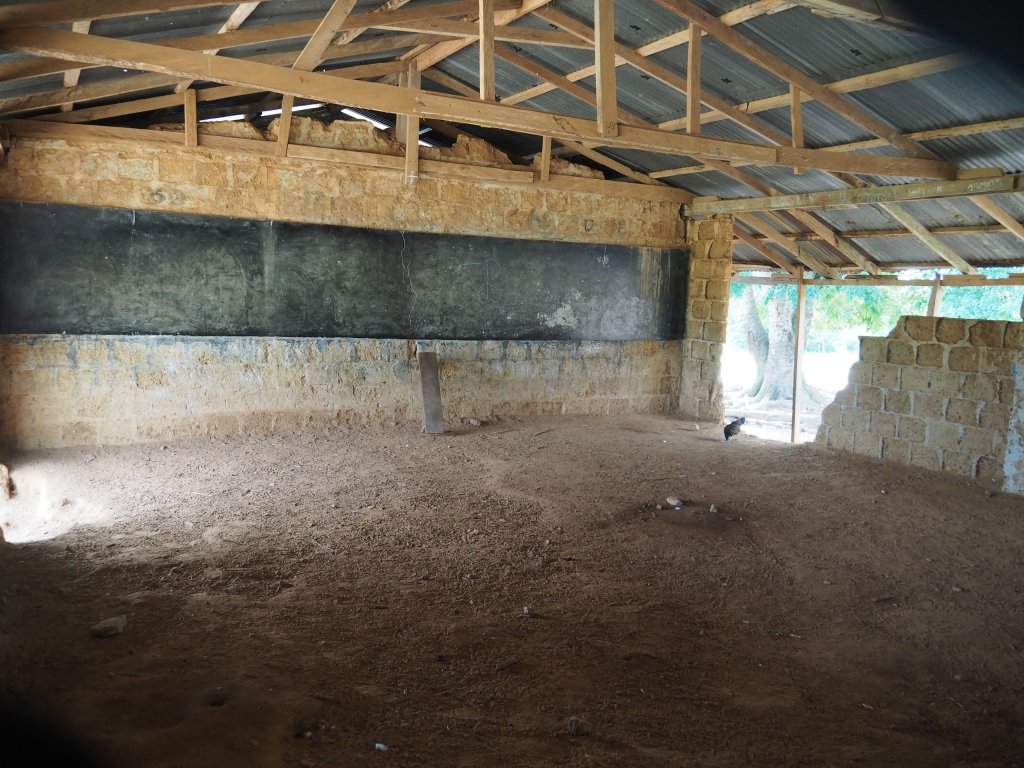
That’s just one example of the misguided approach to the teaching of computing. Add to that the fact that the students don’t have textbooks for any of the subjects they’re taught. They copy into their notebooks whatever the teacher writes or draws on the chalkboard. Think about that for a minute: in order for the student to have a record of what was taught, I have to write or draw an image on the board, then they have to copy that into their notebooks. It’s a highly inefficient means of obtaining a written record of what they were taught.
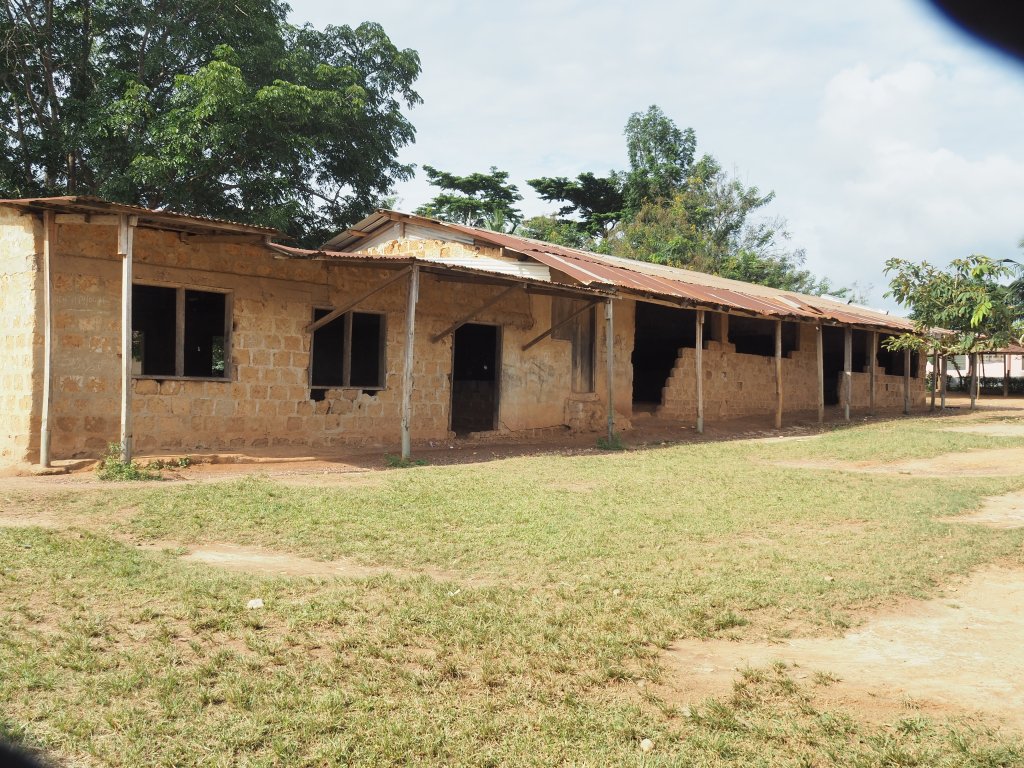
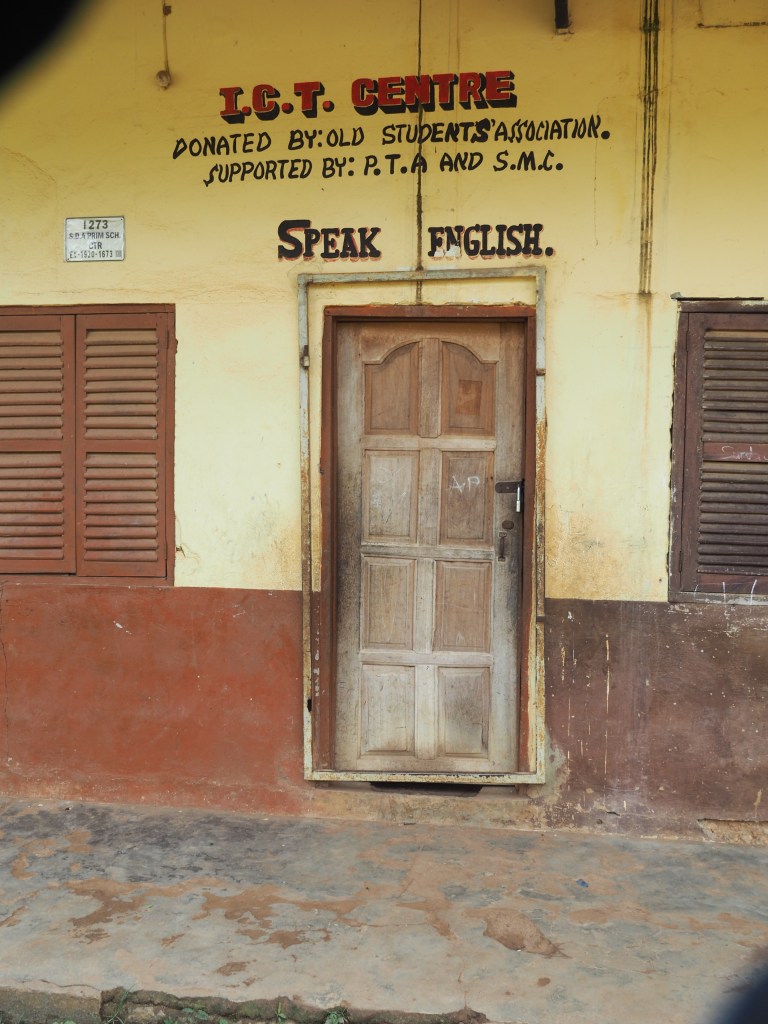
Back to the barcode reader briefly: in my town of about 10,000 people I don’t believe there is a single shop that uses a barcode reader. There are very few shops that use a computer of any kind for that matter. Very few kids have access to computers at home and, although our school does have some computers that work, they can’t be used at school because copper-scavenging thieves stole the electric cable that connected the classrooms to the electric meter. In short, computers just aren’t a part of these kids daily existence.
Lastly, the students’ knowledge of computing is assessed with an end-of-term exam mandated by the school district, which asks such questions as, What year was the second generation of computers introduced? and, List three features of a 3rd generation computer. There’s an inherent contradiction in teaching STEM by rote memorization. Sadly, circumstances conspire against the students getting much useful education in computing. I’ve decided that my students may not ace the exam, but they’ll learn something useful about computing.
To quote Calvin (of Calvin and Hobbes): Aaaaaaacckk!!
That’s enough of me grousing about things here. I remain healthy, although either I’ve shed a few pounds or my pants and belts have all stretched a couple of inches. That’s a story for another post.







 Not A Typical Day
Leave a reply to Gina Cancel reply