June 22, 2024
I’m constantly reminding myself that time flies and that I must get out to experience events in my community. So three weeks ago, when a fellow teacher / friend told me that there would be a beauty pageant at the local senior high school (SHS), I decided I had to attend. Mind you, my interest was less about the beauty part of the pageant than it was about being an amateur anthropologist observing teenagers in their natural habitat. In particular, I was interested in learning more about the environment and experiences that my Junior High School students can look forward to when they get to Senior High School.
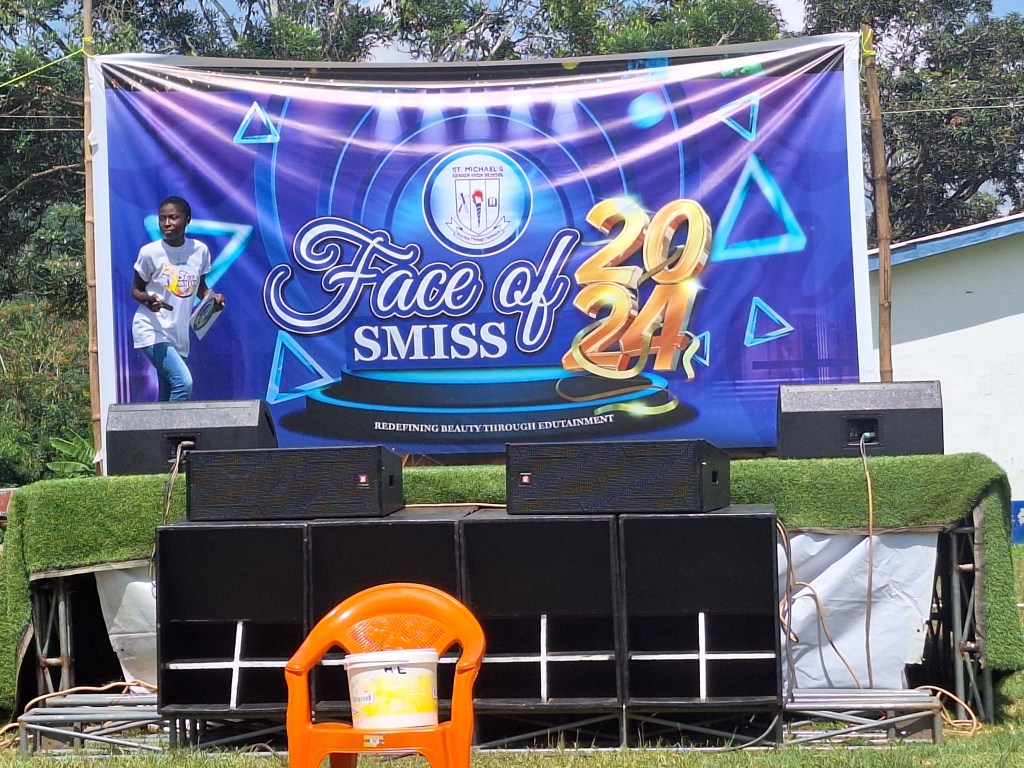
This interest was sparked by the fact that most high schools in Ghana (including the one in my town) are boarding schools. Students spend months at a time away from home attending high school, so I’m sure that emotions and stresses are heightened by the absence of direct parental and sibling support. I can still remember the challenges I faced being away from home when I went to college. Certainly, I was happy to be away from home, but I quickly learned that the alternatives to home weren’t always better than home. Imagine what that experience is like for someone moving away from home at 15. On top of that, it’s a co-ed school, so I’m sure there’s plenty of opportunity for fraught emotions. As a secondary interest in the event, I was curious about the influence of the Catholic Church on this school, because the full name of the school is Saint Michael’s Roman Catholic Senior High School. As with the primary schools and junior high schools in Ghana, it’s common for high schools to be affiliated with one church or another, although at the Primary and JHS level they are still state schools. I’m pretty sure it’s the same for Senior High Schools, because the government pays the bulk of the cost. The Ghana Education Service and the local school district are also responsible for most of the curriculum as well as the hiring of teachers and overall administration. As the product of 12 years of Catholic education myself (I graduated from St. John’s College HS 50 years ago), I was curious what the experience of Catholic high school is like in Ghana.
Now, on the one hand, attending events like this is a very good way to learn about the community; on the other hand, it’s likely that I’ll become a focus of attention. To quote the catch phrase from a 60’s cowboy show starring Walter Brennan, “No brag, just fact” (check it out). I arrived unannounced / unexpected for the SHS pageant at about 10 AM, just minutes before it started. I tried to be inconspicuous but, sure enough, no sooner had I sat down than I was asked if I would be a judge. I suspect they asked me because there’s a certain cachet to having a “distinguished visitor” who not just attends but also somehow participates in an event. I agreed, but I was reluctant for several reasons. First, there’s no telling how long an event will last. (My hope of a two-hour commitment was wildly off target.) Second, this was a contest that was important to the girls who were participating. Under normal circumstances, there would be just three judges (the school’s English teacher; the House Mother, who cares for the girls physical and emotional needs; and the Headmaster). I was concerned that my votes could skew or confound the results in a way that was contrary to popular opinion. (Just what I want – to be in the middle of a “stolen election” controversy.) Third, although I had attended a talent contest at the SHS earlier this year, I hadn’t been asked to be a judge for that event. I was uncomfortable with the fact that I don’t know any of the students or what they are learning in school, which this contest tapped into. I had no context by which to judge the quality of the girls’ efforts. And lastly, in Ghana loudspeakers are supposed to be LOUD, and the judges’ table was about 30 feet from the stage, so there would be no avoiding the avalanche of sound.
The event started with the introduction of the judges, during which I was handed a microphone to say a few words in Twi to introduce myself, which earned cheers and applause for the dancing bear[See Footnote 1]. Then the eight contestants paraded onto the stage to be introduced and show off their “cat walk” skills. The program itself consisted of three elements. The first was an original poem recited (or rapped) by each girl on a topic of social relevance (e.g, women’s empowerment, the importance of DEI; and, somewhat surprisingly for a Catholic school, one on physical and emotional aspects of sexual health). The second element of the program was an original presentation on Ghanaian traditional culture (e.g., a description of a traditional marriage ceremony). The third element (and the major part of the scoring) was the talent portion of the program. There was no “evening gown” or “swimsuit” competition; other than traditional wear during the cultural portion of the program, the girls all wore jeans, t-shirts, and high heels.
The first contestant came on stage to recite her poem and did a good job (based on my limited grasp of expectations). And then it got uncomfortable. It was fortunate that I was in the middle of the judges’ table, because as soon as the first girl finished her poem, a microphone was handed to the judge on my left. He proceeded to give feedback, such as, “Good job, although you need to speak more clearly and not so fast. Also, you were looking at the sky or the ground, everywhere but at your audience, so you could have done better.” What?? Extemporaneous speaking?? What the hell am I going to say??? I suppressed the urge to flee, accepted the microphone when it was handed to me, and said generic things about how I enjoyed her presentation and complimented her on the good points that she raised in her poem, yada, yada, yada. As the event went on I got a bit more comfortable with thinking of things to say, but I generally left it to the other judges to do the critiquing. I tried to find things to compliment, like the two who had the courage to sing a cappella songs during their presentations. If my feedback wasn’t especially helpful, at least it wasn’t soul-crushing.
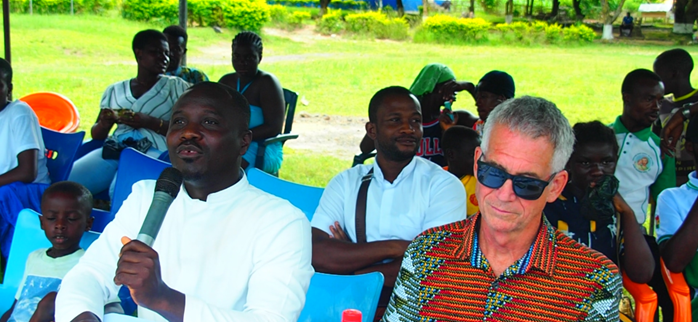
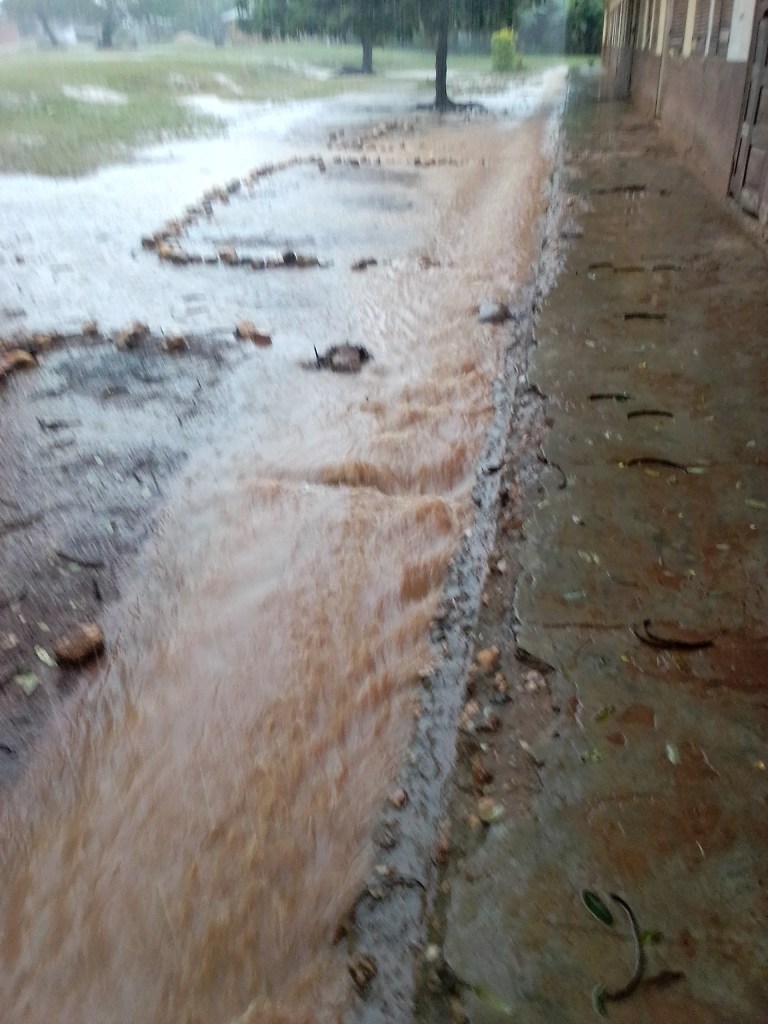
Given the time involved for the girls presentations, followed by the comments from the judges, the first two elements (poems and traditions), took about 3 hours. Then the heavens opened up and there was a downpour that lasted about 45 minutes – a common occurrence at this time of year. It caused a pause in the proceedings because the stage was not covered. The spectators were already sheltered, either under a tent, like where I was seated, or on the covered porches outside the classrooms that were alongside the event space, so there was no mad dash for cover. But the proceedings came to a standstill as we waited out the storm. Which reminds me of another observation about life in rural Ghana: events are either held outdoors or in a church. Schools don’t have big indoor auditoriums, theaters, or cafeterias. Schools have classrooms, period. And there aren’t any big municipal meeting places or performance spaces. If there’s going to be a community meeting, it will be in one of the churches, in the daytime on a weekday.
Once the rain stopped, the talent portion of the competition began. That was the highlight for most of the audience (students), because there was a lot of singing and dancing. Most of the contestants were basically singing along karaoke-style and dancing to popular songs, but there were some original contributions as well. It kind of dragged out for me because the performances tended to be longer than the earlier elements, but the audience was very enthusiastic, singing along and dancing in front of the stage.
Just as I was beginning to hope that the event would be over soon and I could leave, the MC interrupted the proceedings to announce the arrival of a special visitor – a candidate for Parliament and his entourage. I groaned inside. It would be bad form to leave before the end of the event, but I’d had my fill of the contest and had no interest in listening to a politician speaking in a language I struggle to understand. But I stayed. And it got worse than I could imagine. After two members of the entourage pumped up the crowd, another member started walking around the stage, literally throwing money into the air (the equivalent of $10 bills). Of course, there was a rush to the stage. Fortunately, the rain of cash quickly ended and the candidate took the microphone. I couldn’t understand what he said, although when I heard the word “Expat” I figured he was referring to me. Sure enough, he looks directly at me and says, “Hello obroni! Welcome!” Peace Corps strongly advises that we avoid any kind of involvement with politics, so I gave a brief nod and prayed that I not be asked to speak. I’m imagining that he made lots of empty promises because there were enthusiastic cheers from the crowd. After he finished speaking, the rain of cash resumed for several minutes.
Finally, the contest wound down with each contestant answering a different question posed by the MC. Something along the lines of, “How will you save the world?”. I was relieved to see that my scoring was not significantly different from that of the other judges. Each contestant was presented with a gift bag filled with swag, and then it was time to crown the winners. I suppose there was a standard procedure for doing so, but no one explained to me what I was supposed to do. I found myself holding the sash for Miss SMISS 2024. I went up on stage and draped the sash over the winner while she erupted in tears. A crown was placed on her head and there were hugs all around (but thankfully not me, which would have been awkward). The audience broke out in song and dance as some rushed the stage to hug their friends. I extracted myself, shook hands with a fellow judge, and then made a quick exit.
I had learned a bit about the SHS experience, I amused the crowd a bit, and I saw how political campaigning works in Ghana. That’s how a Peace Corps volunteer can spend six hours on a Saturday.
[1] A new term I learned this week. A “dancing bear” is “… an unusual and unexpected feat. Observers are impressed by the unexpected capability rather than the finesse of the performance.” [language.foundation video on YouTube]
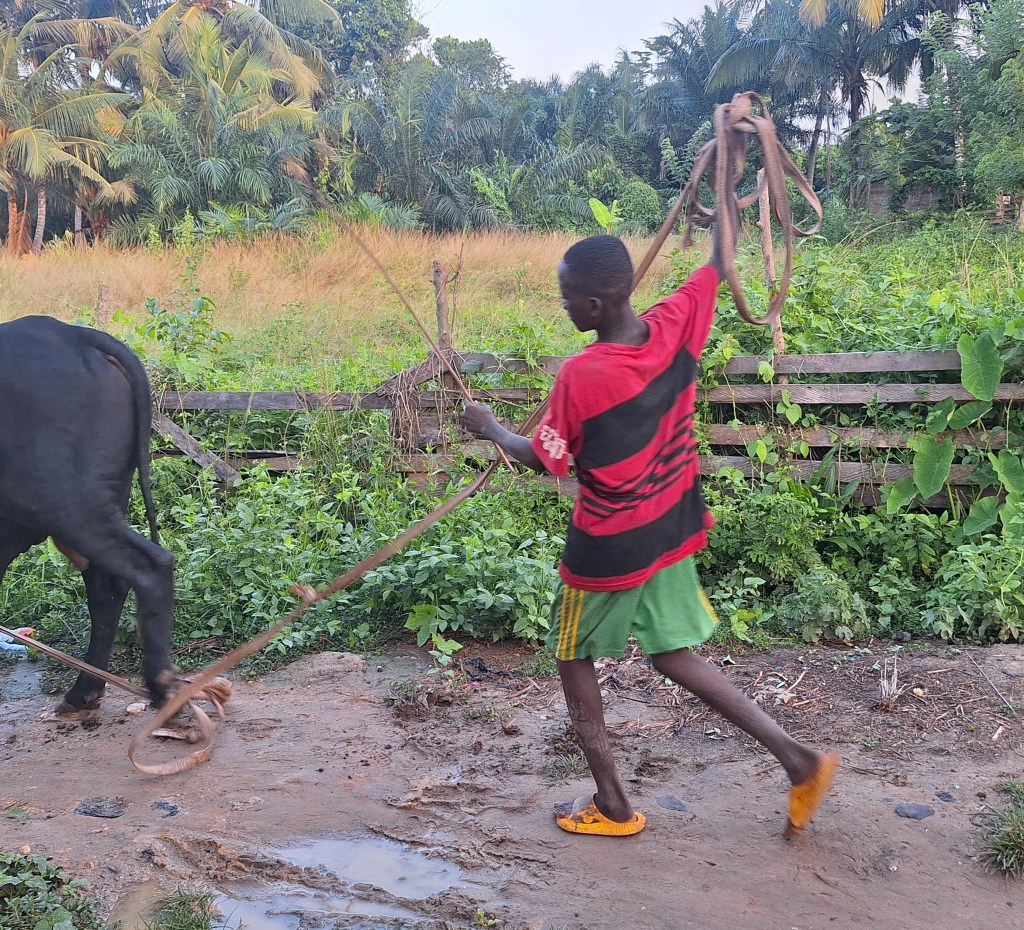
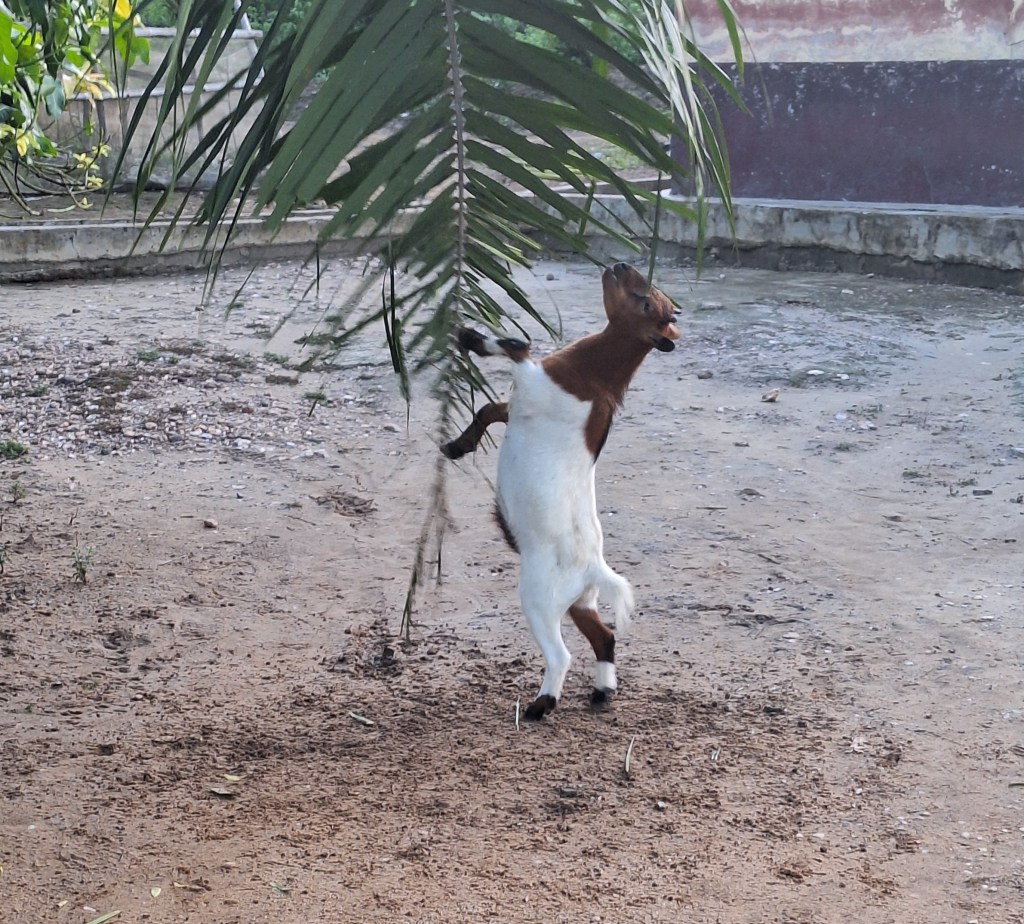
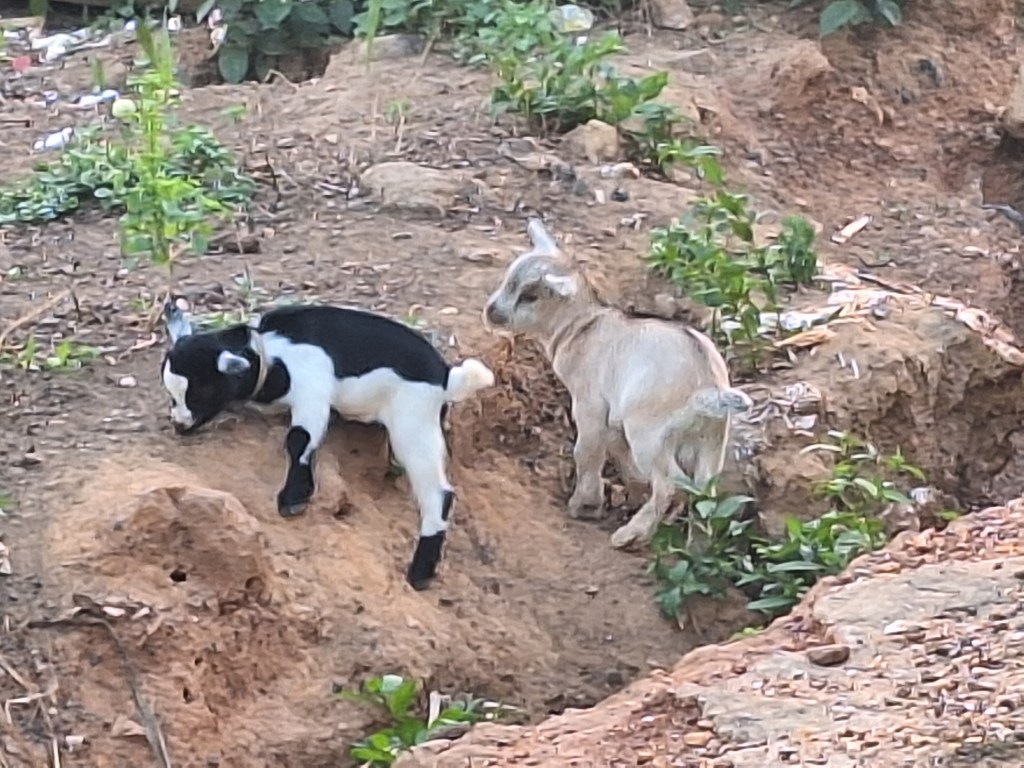
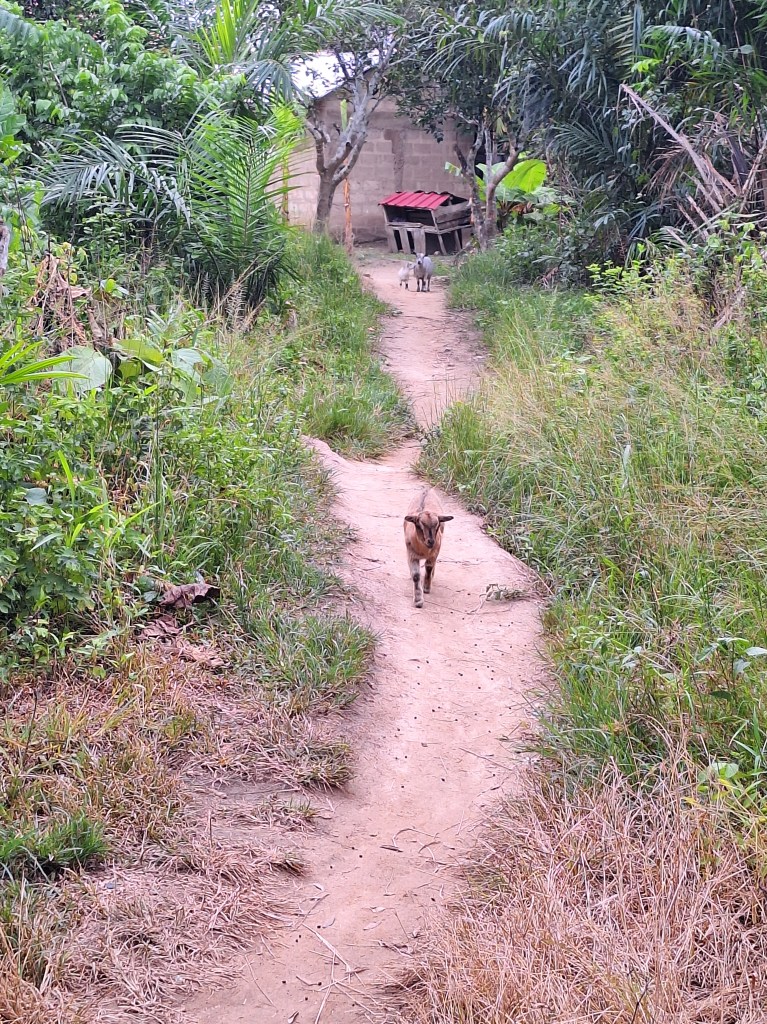
Scenes around town
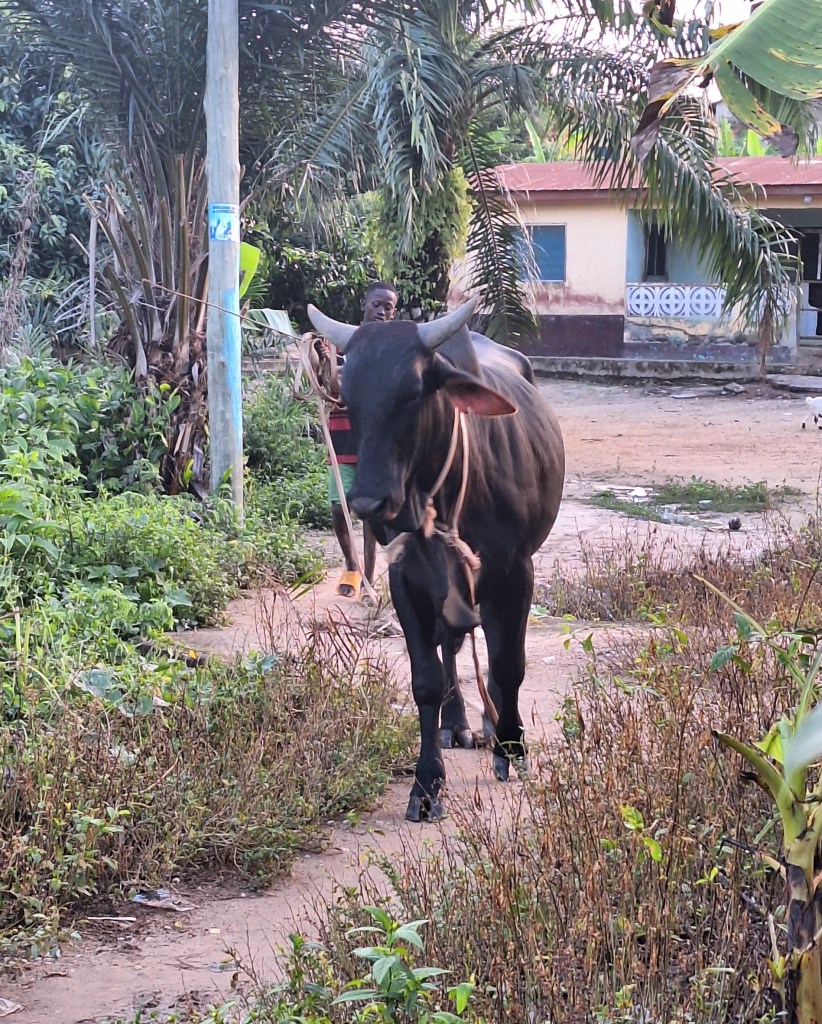




 Not A Typical Day
Leave a reply to Liz Madisetti Cancel reply