Disclaimer: “The content of this website is mine alone and does not necessarily reflect the views of the U.S. Government, the Peace Corps, or the Ghanaian Government.”
April 28, 2025
I do my best to adhere to the Peace Corps Mission Statement and fulfill the agency’s Goals (https://www.peacecorps.gov/what-we-do/our-mission/). Certainly, I view my experiences through those lenses. But I’ve been here long enough that some of the rose-colored tint is wearing off my glasses. It’s not so much that I get disillusioned with Peace Corps – decades of experience in a corporate environment have tempered my expectations for working with large organizations that have to please multiple constituencies. Rather, it’s the day-to-day annoyances that build up and grind me down over the span of weeks and months. Forgive me while I rant a bit.
The Things We Take For Granted
or
You Don’t Know What You’ve Got Till It’s Gone
I have described my water situation previously, acknowledging that I really can’t complain compared to the hardships that some of my fellow volunteers have to deal with. But that hardly means that my domestic life is carefree. I’ve come to realize that my water situation is somewhat precarious, due to a number of factors.
My house is connected to the municipal water supply, but that only pumps water to my house during limited hours, usually starting between 6:30 and 7:30 in the morning and lasting for about an hour. On occasion, I’ll open a tap at a random time just to see if there happens to be water. Sometimes I’ve been pleasantly surprised, but those events are rare and unpredictable.
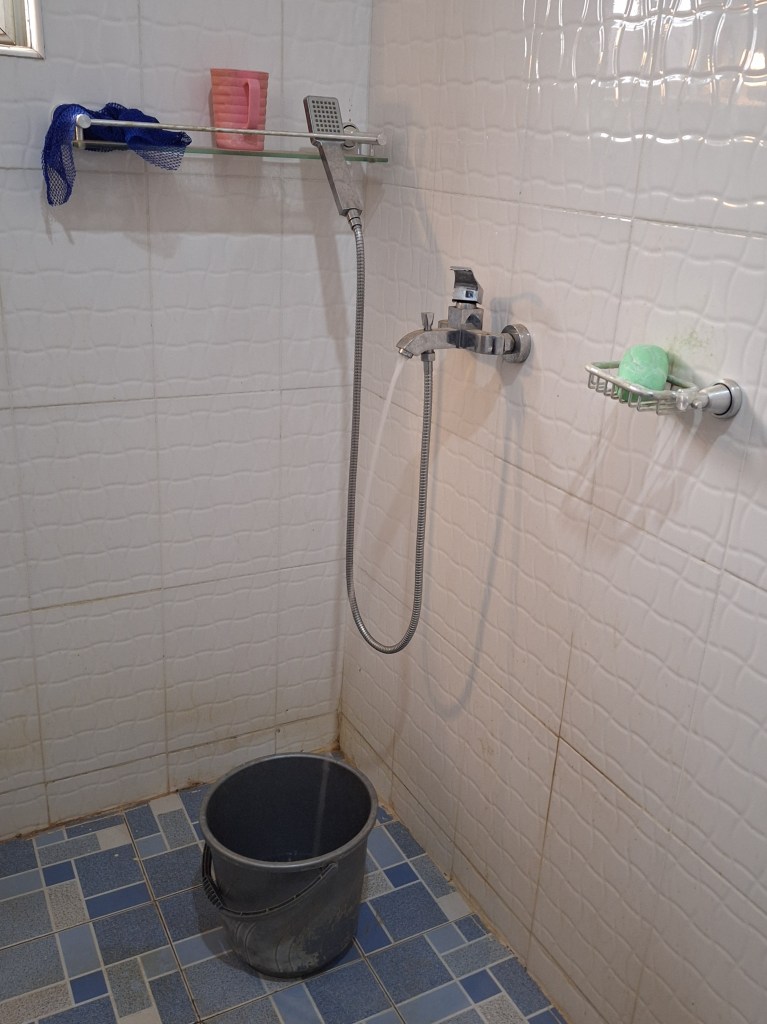
Every day I have to be alert to when the water arrives so I can collect and store it. I’m usually up by about 5 AM, and one of my first tasks every morning (along with making coffee) is to set up my Water Alarm. When the alarm goes off, I scurry between the bathrooms and kitchen, turning on the taps to fill as many containers as I have available with enough water to get me through about three days, should the water not arrive for a couple of days.
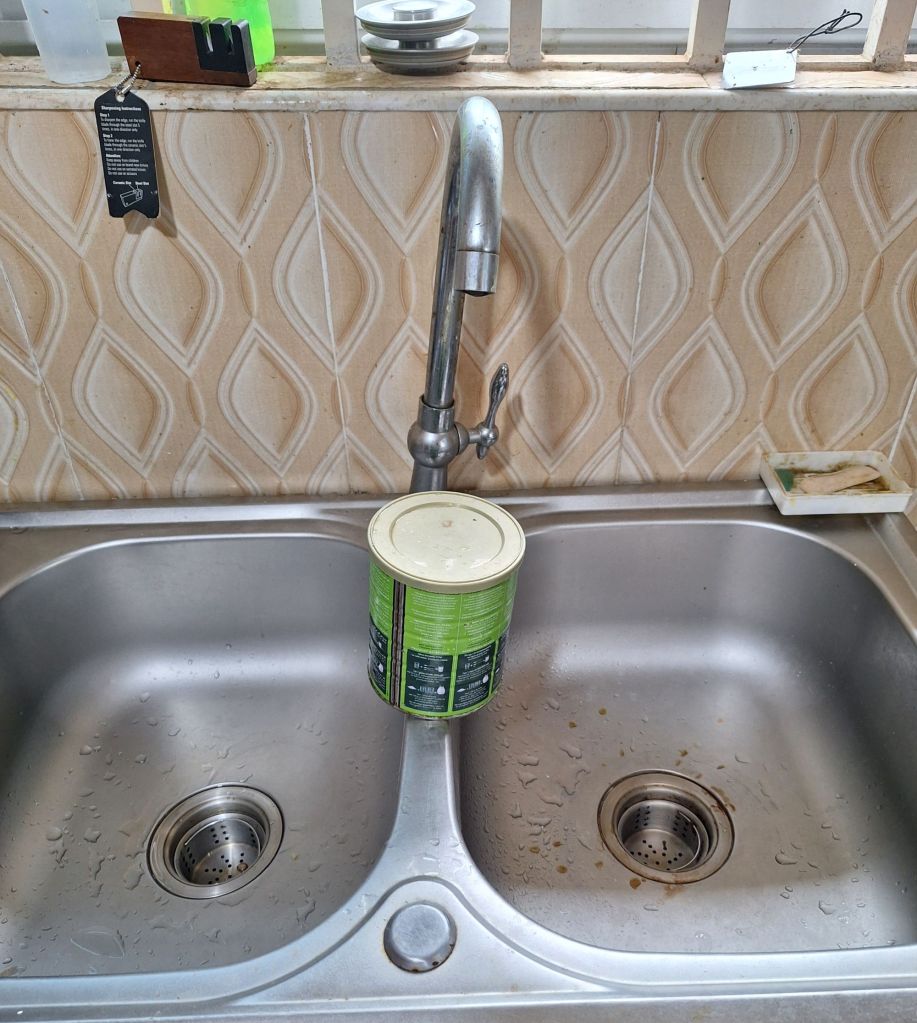
Depending on how much water I’ve used on the previous days, it will take a minimum of 10 minutes or up to 30 minutes to fill my buckets and the 100 L barrel in the kitchen. While they are filling, I move from tap to tap, keeping an eye on each container and rotating them as they get full. I give the toilets a flush once their tanks fill up.
If the water doesn’t start flowing until 7 AM then I’m pressed to get to school on time for my first class. Sometimes the water just doesn’t come on at all in the morning. In that case, I close the tap and go to school. If I’m lucky, the water will be flowing in the afternoon or evening when I get home, but that usually doesn’t happen. So then I have to draw down on my reserves and hope that water will be flowing in the morning.
On the infrequent days that I need to travel, I usually try to leave the house before 6:30 AM so I can get to my destination before traffic gets too bad. In that case, I just have to hope that when I return home the water will be flowing the next morning.
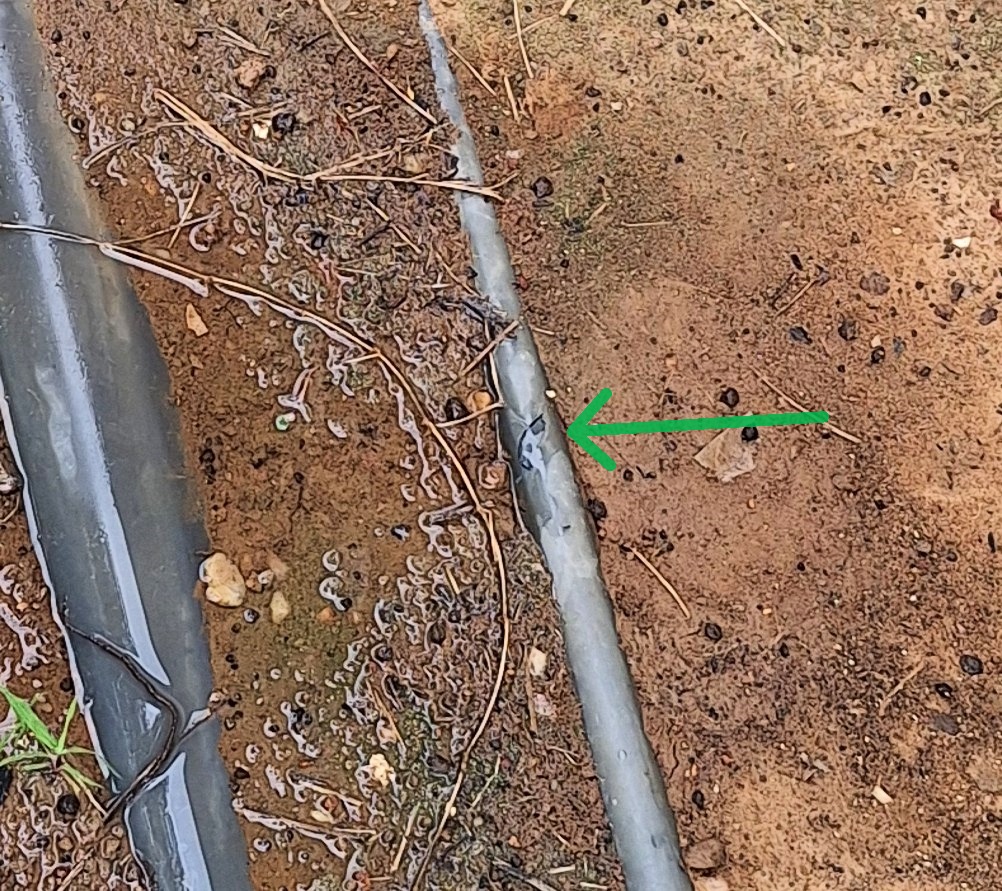
Lately I find myself having to deal with the frustration of an inconsistent water supply. Over the past few months there have been several mornings when there wasn’t any water and at least two prolonged episodes when there was no water for several days. Most recently, I had no water on Good Friday. I suspected things were going to be bad because the pipes were blowing out air rather than water when I opened the tap that morning and I was pretty sure there wouldn’t be any plumbers working on the system over Easter weekend. By Monday morning my water containers were all depleted and I found myself having to haul water from a community tap nearby (not part of the municipal supply). As expected, I was admonished for carrying my own water. A neighbor boy saw my predicament and helped me, although I also made a few trips with a bucket myself. In situations like that, I tend to get enough water to last for two days, max. That situation continued for a week; I had to rely on students who happened to be around, because they’re on Easter break now. At times like that I forgo laundry as long as I can in favor of being able to flush toilets.
As a result of episodes like that over the past two years, I’ve developed a healthy paranoia about my water supply. I miss being able to turn on a tap any time of day, any day of the week, and have clean water flowing to wash my hands, brush my teeth, or do the dishes. If you have a reliable water supply, then consider your money well spent. I can empathize with the folks in western North Carolina who suffered through Hurricane Helene last year. The availability of clean water becomes the sole focus of your attention when you don’t have it.

Travel
- Traveling Prayer
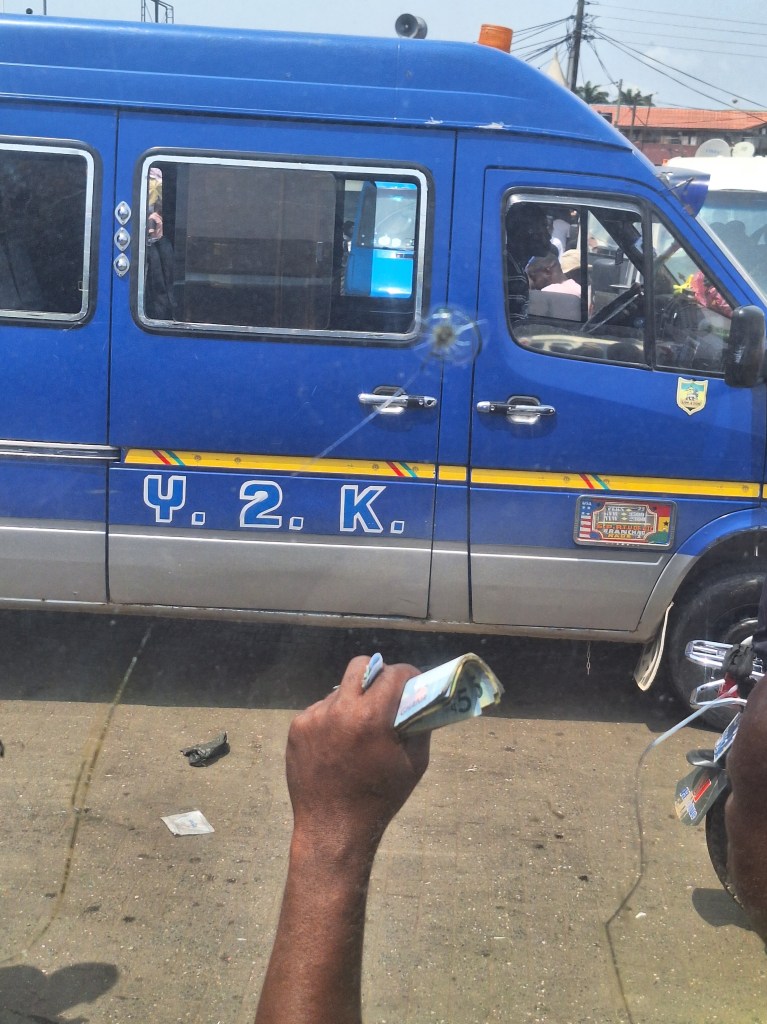
Unless you are riding on a plane or a big intercity bus, there are no scheduled departure times for most modes of transportation. Taxis and tro-tros will only depart when they are full. While you’re sitting in a tro-tro waiting for the last passenger to appear, it’s very common for a self-styled preacher to poke their head into the vehicle to read a bible passage aloud, say a prayer for a safe journey, and sometimes lead in the singing of a hymn. This can go on for five or ten minutes (in the local language, so I don’t understand it) and is usually followed by a palm reaching out for a donation. Not being a religious person myself, I just stay quiet. The experience can be a little bit annoying / intrusive but, given the relatively short duration, and considering the often hair raising experiences at high speeds on Ghanaian roads, I figure that a prayer can’t hurt. One day I was quite pleasantly surprised to realize that the old man who had been preaching was now singing “I’ll Fly Away”, a wonderful song which you might remember from the soundtrack of the movie “O Brother Where Art Thou” (https://youtu.be/lFamN-oXRMQ?si=geotdEv3ivXbZlNH). I like the song a lot, especially that version, by Gillian Welch and Alison Krauss; however, the lyrics don’t exactly offer the kind of reassurance that one is looking for before venturing out on a journey (“One bright morning, when this life if over, I’ll fly away”).
The only really objectionable experience with one of these “parking lot preachers” occurred earlier this year on a small bus when a self-appointed preacher remained on the bus as it departed the station. I had never seen a parking lot preacher also be a passenger. He was loud and rather insistent on getting participation (“Say Amen!”) and the bus, though small, was big enough for him to stand, face the passengers, and move about as he preached. My hopes sank as we got on the highway and he hadn’t been dropped off somewhere. I hadn’t signed up for this participatory activity. I got out my earplugs and kept my eyes glued to my cellphone. My sense of dread increased with each passing mile as I began to think he might hold forth for the full three hour duration of the trip. He certainly appeared to have the stamina for it. It was a great relief after about a half an hour when he asked to be let out at an odd location (in the middle of a long construction zone). I wasn’t sad to see him go. I’ll avoid such buses on future trips.
- After Dark
I rarely travel after sunset, especially near my site. Transportation doesn’t completely shut down at night, but taxis get a lot harder to find, you may wait a long time for one to fill up, and it’s more expensive than daytime trips. Not to mention, there are no streetlights on the rural roads and there’s no telling what hazards you might encounter, such as cars with very dim headlights (or none), pedestrians, animals, slow moving vehicles, stopped vehicles, … Some of my fellow PCVs catch tro-tros between 2 AM and 4 AM so they can avoid some of the horrible traffic in and around Accra (Ghana’s capitol city). But in general, most people (PCVs and Ghanaians) avoid the hazard of nighttime travel.
- Standing Out in a Crowd
Transportation is logically organized, once you understand how it works. Intercity travel is from station to station (sometimes called a lorry station). The challenge is to find the station nearest to you where you can catch a taxi, tro-tro, or bus going to your destination. (Note: These stations are not like airports or train stations; they’re basically just big parking lots. Often there is no actual building. It’s an informal designation, really.) In my village, there is one clearly identified station and then a couple of loosely defined locations where you can find taxis to outlying villages. In my market town, there are two stations for travel to bigger/farther cities and several small stations for travel to places like my village.
Based on my limited experience, I imagine there must be several dozen stations, big and small, scattered around Accra and the surrounding communities. On any given day at the station I pass through most frequently, there are hundreds of vehicles and thousands of passengers heading to any of a hundred or more destinations. Add into the mix family members seeing loved ones off to their destinations, parking lot preachers, ticket sellers, and hawkers selling almost any kind of food, beverage, personal care products, toys, sunglasses, cellphone cases, “health products”, etc … and the place takes on the feel of a carnival.
Considering the number of people involved and the number of destinations, there’s no guessing where any individual person might be heading. But I began to notice a pattern that was unmistakable. When a taxi or Uber I’m riding in pulls up to this station, instantly there are three or four men at my window asking, “Where are you going? Nkawkaw? Nkawkaw?” Nkawkaw (pronunciation: make the N sound like you’re going to say NO, but then say “cocoa” instead) is, in fact, my destination. At first, I thought it was a coincidence, or maybe evidence that Nkawkaw is the most common destination from this station, but I realized that wasn’t true. How did these people guess my destination? It’s not like I’m advertising it in any way. But then it dawned on me: although there are thousands of people in this hustling, bustling station, I’m probably the only old obroni man who ever shows up there, and they’ve learned that my destination is always Nkawkaw. I may not recognize or remember them, but it’s easy for them to remember me. I’m accustomed to being easily recognizable in my village and in Nkawkaw, where I often go to shop. I’m surprised by the number of people in Nkawkaw who call out “Teacher Kwadwo!”. It was a little unsettling to realize that I had become recognizable and predictable in a place that I only pass through occasionally.
Miscellany
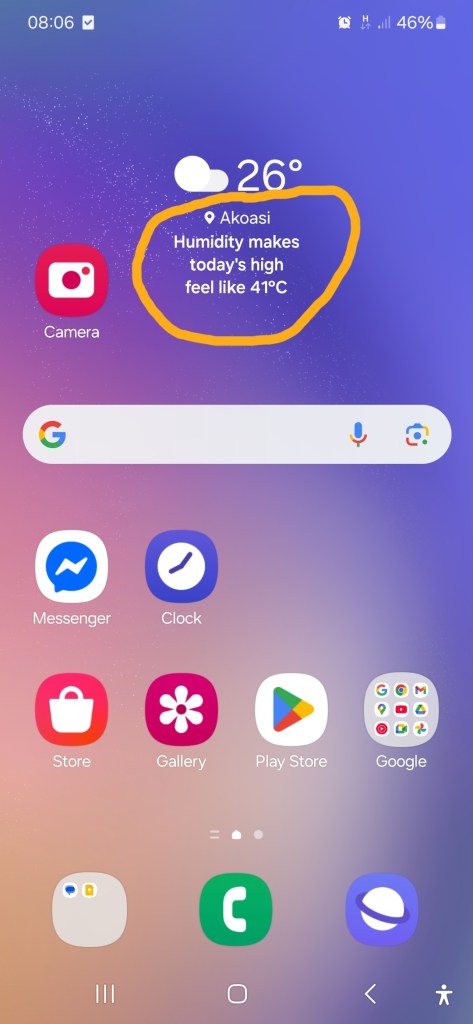
(41°C = 106°F). But by midafternoon it seemed that the message was probably correct. Thankfully, the temperature drops overnight.
Most creative name for an entrepreneurial enterprise
Rastaman’s Multifarious Services
I spotted this title in a village where I was attending a funeral. There was no list of what those multifarious services might include. Probably too numerous for the signboard, depending on how much Rastaman has smoked.
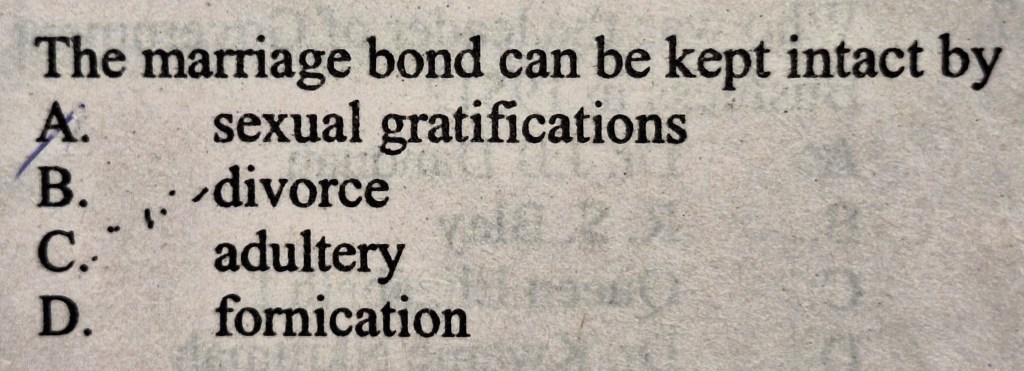
From the recent Social Studies Exam
Watches
Watches are not devices used to keep track of time. Instead, they are jewelry intended for show. When I see someone wearing a watch, I try to glance at it to see what time it says. More often than not, the time is incorrect. A follow-up glance 10 or 15 minutes later confirms that the battery must be dead.
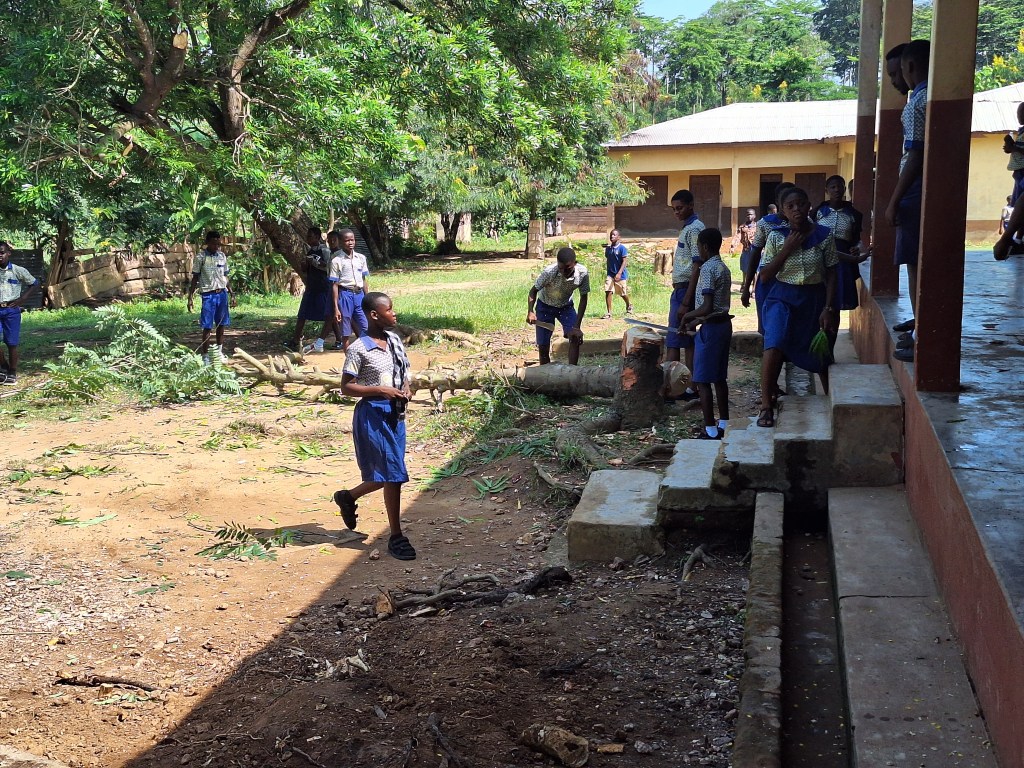
Labor is Cheap
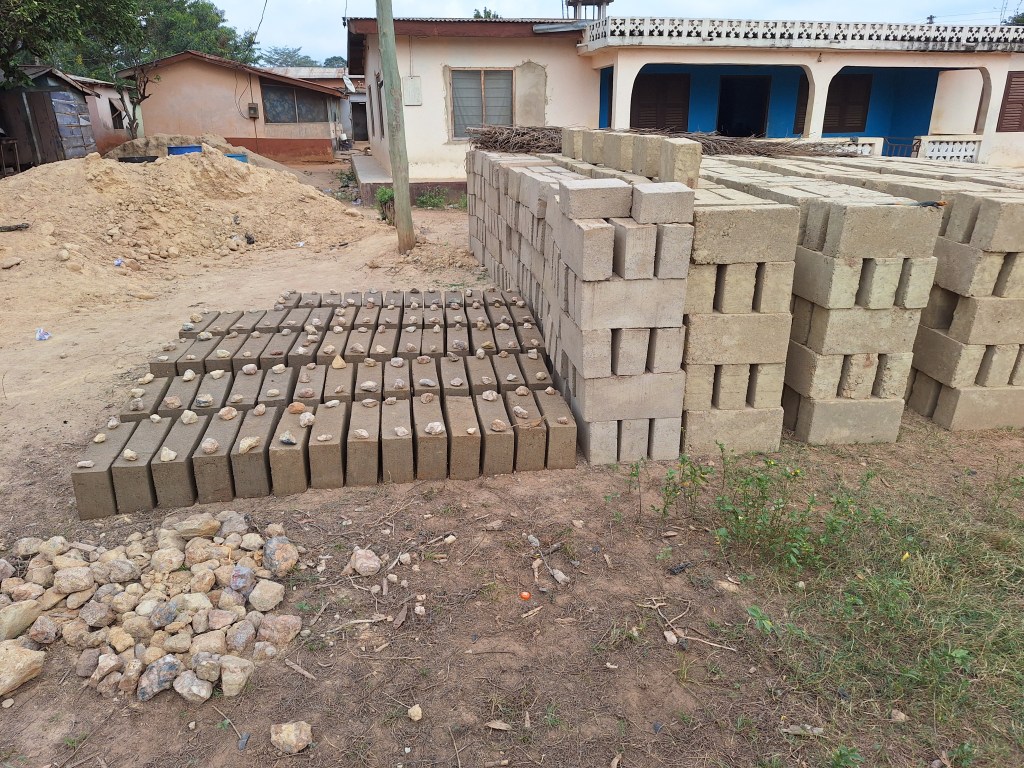
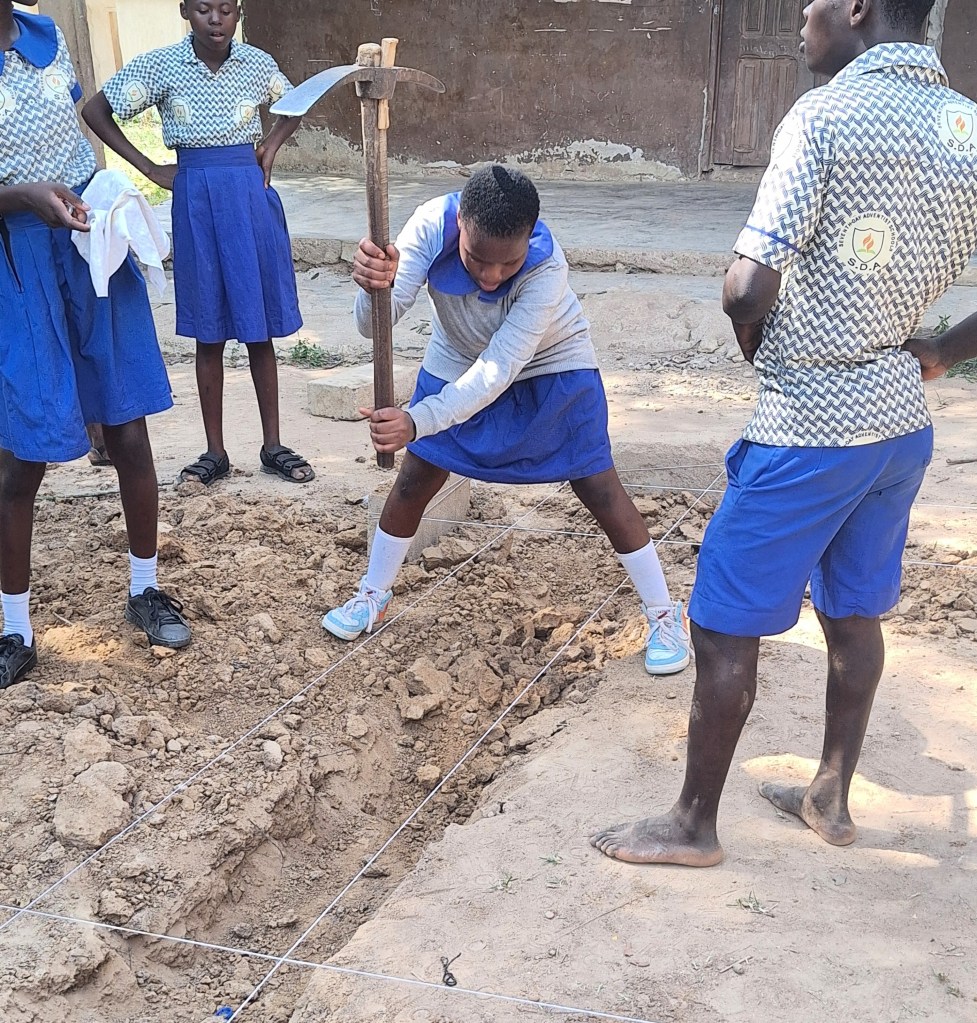
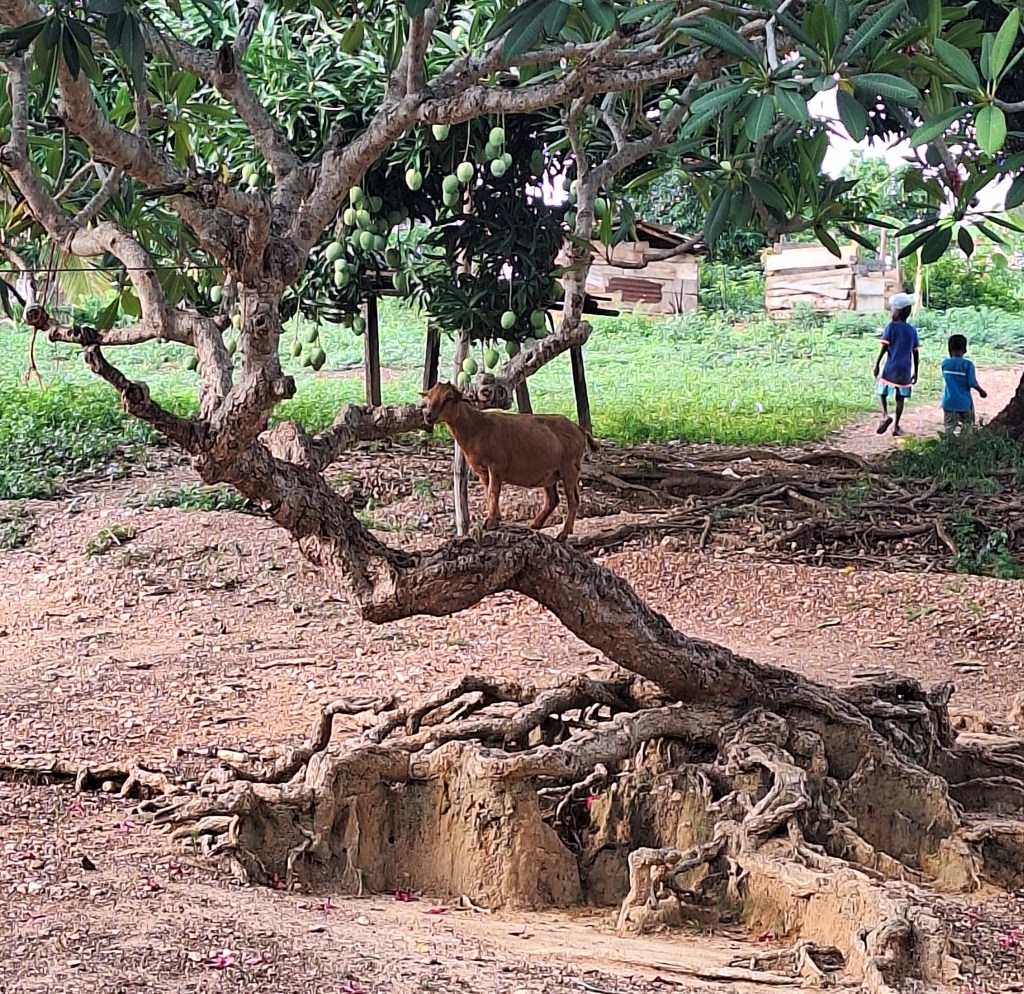
And for the animal lovers…


Until next time!


 Not A Typical Day
Leave a reply to Jason Graves Cancel reply